Lockouts · Oakville
Home Lockout Service
Someone pushed the privacy button on the bathroom door and pulled it shut behind them, leaving the room locked and empty.
In plain words
Different locks call for different openings, and a lockout visit starts by reading the hardware on your door. A spring latch in a knob or lever behaves differently from a deadbolt, a mortise lock in an older home has its own internals, and a high-security cylinder resists shortcuts that work on builder-grade hardware. A smart lock adds batteries and, on many models, a hidden keyed override, though some key-free designs rely instead on their own backup power, codes or app access. Knowing which is in front of them lets the locksmith pick, decode or bypass the mechanism, keeping the lock intact rather than reaching for a drill.
How the visit goesIt is minus fifteen, the wind is coming across the driveway, and the key will only go halfway into the deadbolt. Yesterday's thaw left water in the keyway and overnight it froze solid. Forcing it only makes the metal flex.
Home Lockout Service
How the visit goes
Checking a smart or keypad lock before opening it
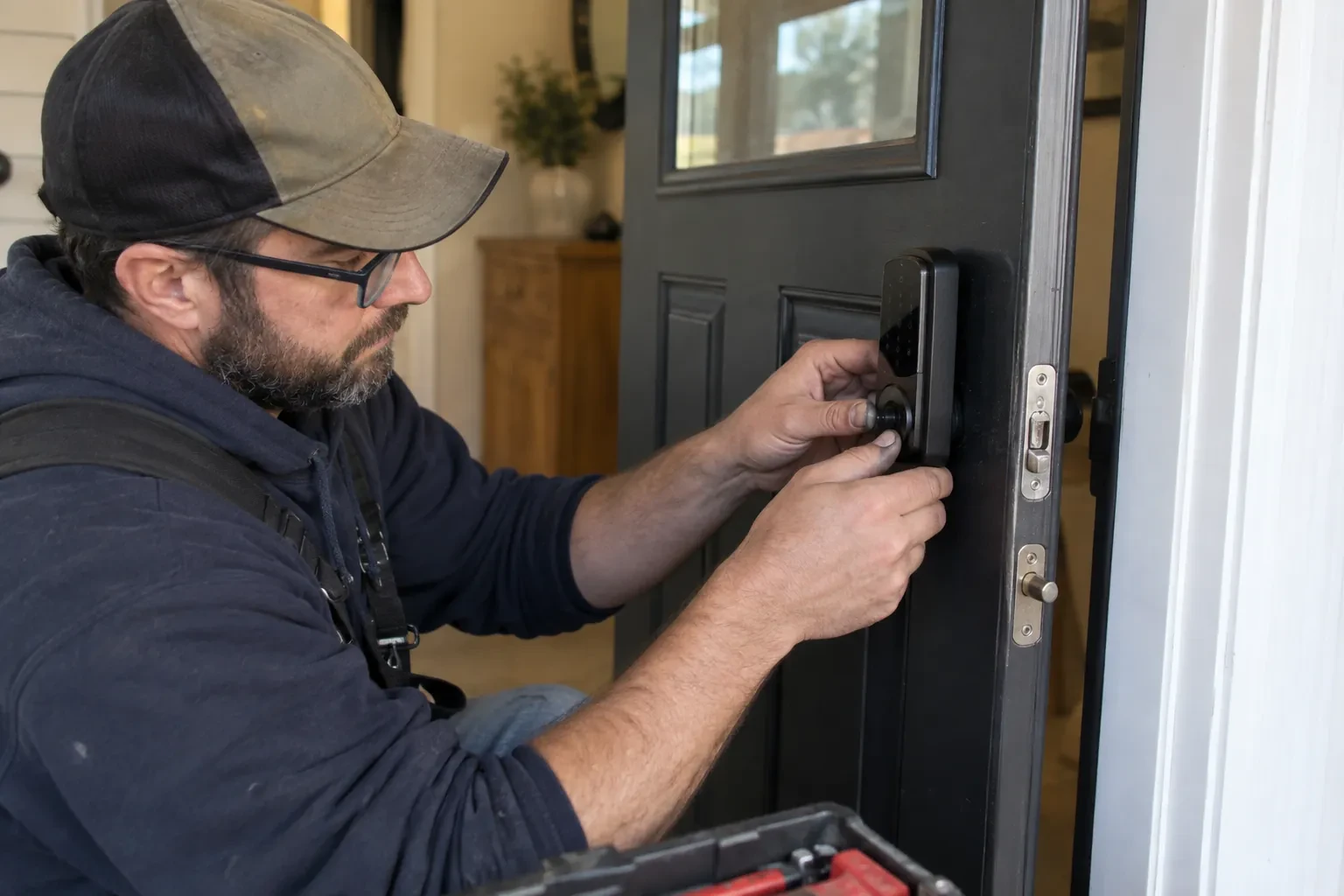
Electronic locks get their own set of questions. Is the keypad completely dead or just refusing the code? Are there battery contacts on the outside that accept a nine-volt battery for a temporary boost? Is there a mechanical override cylinder behind a cover, and does anyone hold the key for it? Is the lock paired to an app that could unlock it from a phone, and has the phone been factory reset lately? These checks decide whether the door can be opened by simply restoring power, by using the override cylinder, or by treating it like any other lock. It also tells the locksmith what to reset once you are inside.
Freeing a frozen cylinder
Ice is handled with patience rather than force. The locksmith applies a lock de-icer or warms the cylinder face gently so the meltwater inside turns back to liquid and drains, then works the key or a pick in small movements until the plug turns freely. Hot water is never poured on the lock, because it refreezes in the keyway and can crack a cold cylinder. Once open, the cylinder is dried and given the lubricant that model's maker approves, a dry graphite, PTFE or specified liquid product, applied sparingly since too much can gum the mechanism. If the door itself had frozen to its weatherstripping, that seal is cleared and checked too.
Looking after the cylinder afterwards
A lock that has just been opened deserves a little care so it keeps turning sweetly. Twice a year, follow your lock's own maintenance guidance: many residential cylinders take a puff of dry graphite or PTFE lubricant into the keyway, some a specified liquid product instead; general-purpose oil sprays attract dust and gum the pins. Wipe grit off your keys before using them, and retire a key that has worn thin or bent, cutting a new one from the code or from a crisp original rather than from a tired copy. If the key starts to need a wiggle to turn, that is the cylinder asking for attention early, while it is still an easy fix rather than a lockout.
Home Lockout Service
In the van
Pick and tension tools
Latch and bypass tools
Key blanks and key cutter
Replacement cylinder or deadbolt
Dry graphite or PTFE lubricant
Home Lockout Service
What affects the quote
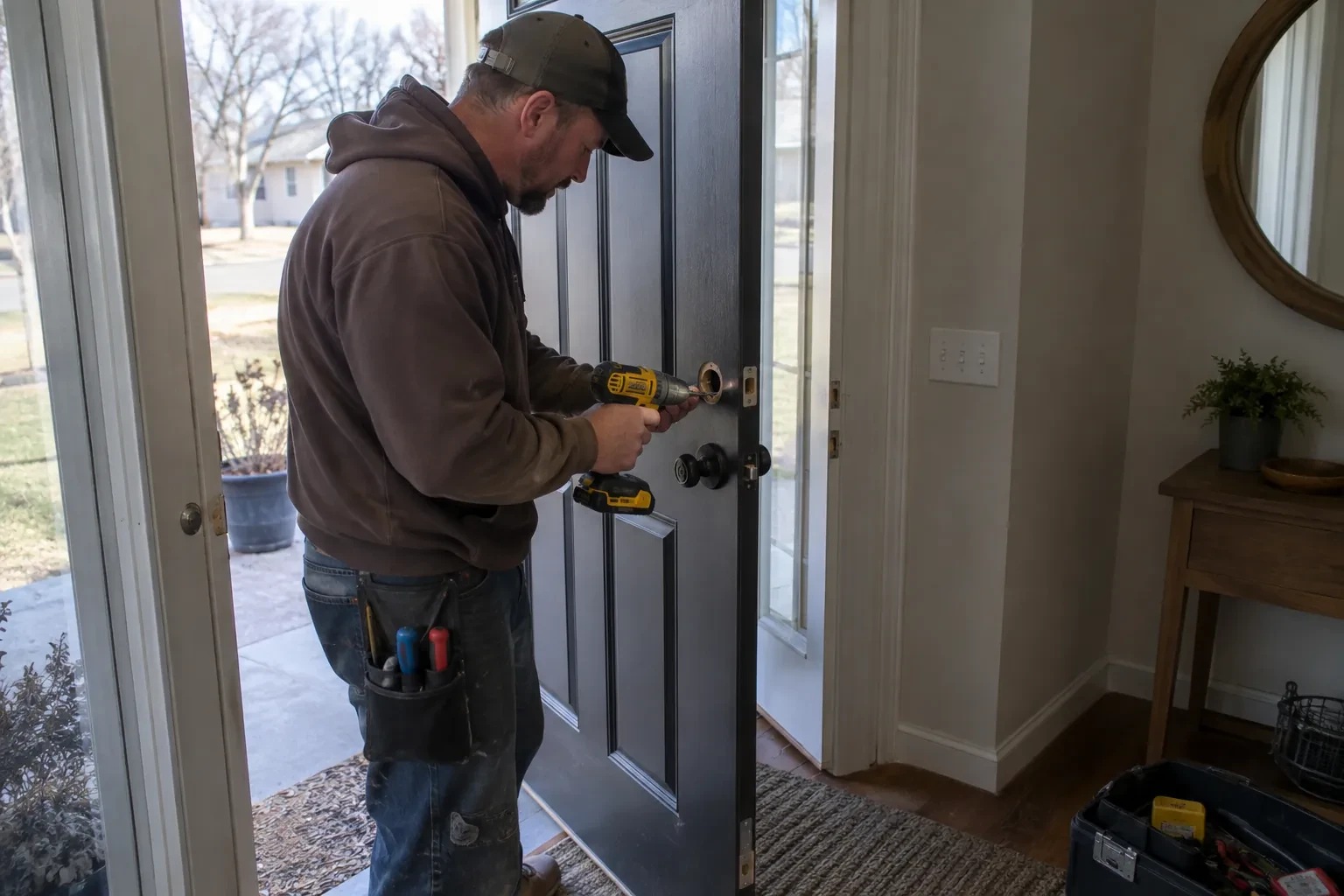
Drilling and a replacement cylinder
If the cylinder has to be drilled, the quote gains the new cylinder or complete deadbolt and the labour to fit it. You are told this before the drill comes out, never after.
Interior door or exterior door
A bathroom privacy lock or a bedroom door is generally a lighter job than an exterior deadbolt, and an old keyed interior mortise lock sits somewhere between. The quote follows the hardware, not the room.
Type and grade of the lock
A builder-grade knob latch, a residential deadbolt, a mortise case in an older home and a high-security cylinder each take different tools and different amounts of time to open, and that difference shows in the quote.
What to have ready
- Which door are you locked out of, and what kind of lock is on it?
- Do you have photo identification with you, or is it inside?
- Is the lock a keypad or smart lock, and does it have any power left?
Home Lockout Service: questions
QuestionsCan you open an interior door such as a locked bathroom or bedroom?
Yes, and these are usually gentle jobs. Privacy locks on bathroom and bedroom doors are built with a small emergency release on the outside, and when that has been painted over or stripped a locksmith can still operate the latch from outside with the right tool. Older interior doors with a keyed mortise lock or a bit key are opened by picking or by cutting a key to the lock. The door and trim stay as they were.
Will opening the door damage my lock?
In most residential lockouts the lock is untouched. Picking, decoding and latch tools operate the mechanism the same way your key does, so there is nothing to repair afterwards. A drill only appears when a cylinder is seized, plugged by a snapped key or engineered against picking, and you hear about that before it starts. Should it come to that, replacement hardware goes on before the locksmith leaves so you lock up normally that evening.
What if the door is stuck rather than the lock?
This is more common than people expect, especially in older houses and at the change of seasons. A door that has swollen, sagged on its hinges or been pushed out of square by thick weatherstripping can pin the bolt against the strike so it will not draw back even with the right key. The locksmith relieves the pressure to free the bolt, then adjusts the strike, hinges or seal so the door closes and locks without a shoulder.
Related services
- Broken Key ExtractionThe key went in like any other morning, you turned it, and something gave with a small metallic click.
- Break-In Damage Lock RepairSomeone smashed the little window beside the door, reached in and turned the thumb-turn.
- Seized & Jammed Lock OpeningThe old mortise lock on the front door of the house turns the key halfway and stops with a dull clunk.