Commercial · Oakville
Access Control Installation
You just leased the empty unit next door and want the new tenant to open their own suite without a key to yours, to the loading dock, or to the electrical room down the hall.
In plain words
The installation is not finished when the last door is wired; it is finished once the business can run the system without the locksmith standing there. That means an administrator account handed over with full control, a walkthrough of adding and revoking credentials, pulling an entry log, and changing a schedule for a holiday or an event. Beyond that point, whether the installer keeps any support or maintenance access is a setting the business chooses at handover rather than something assumed either way, and every routine change to who can enter is the business's own decision.
How the visit goesYou just leased the empty unit next door and want the new tenant to open their own suite without a key to yours, to the loading dock, or to the electrical room down the hall.
Access Control Installation
How the visit goes
Checking which doors are also exits
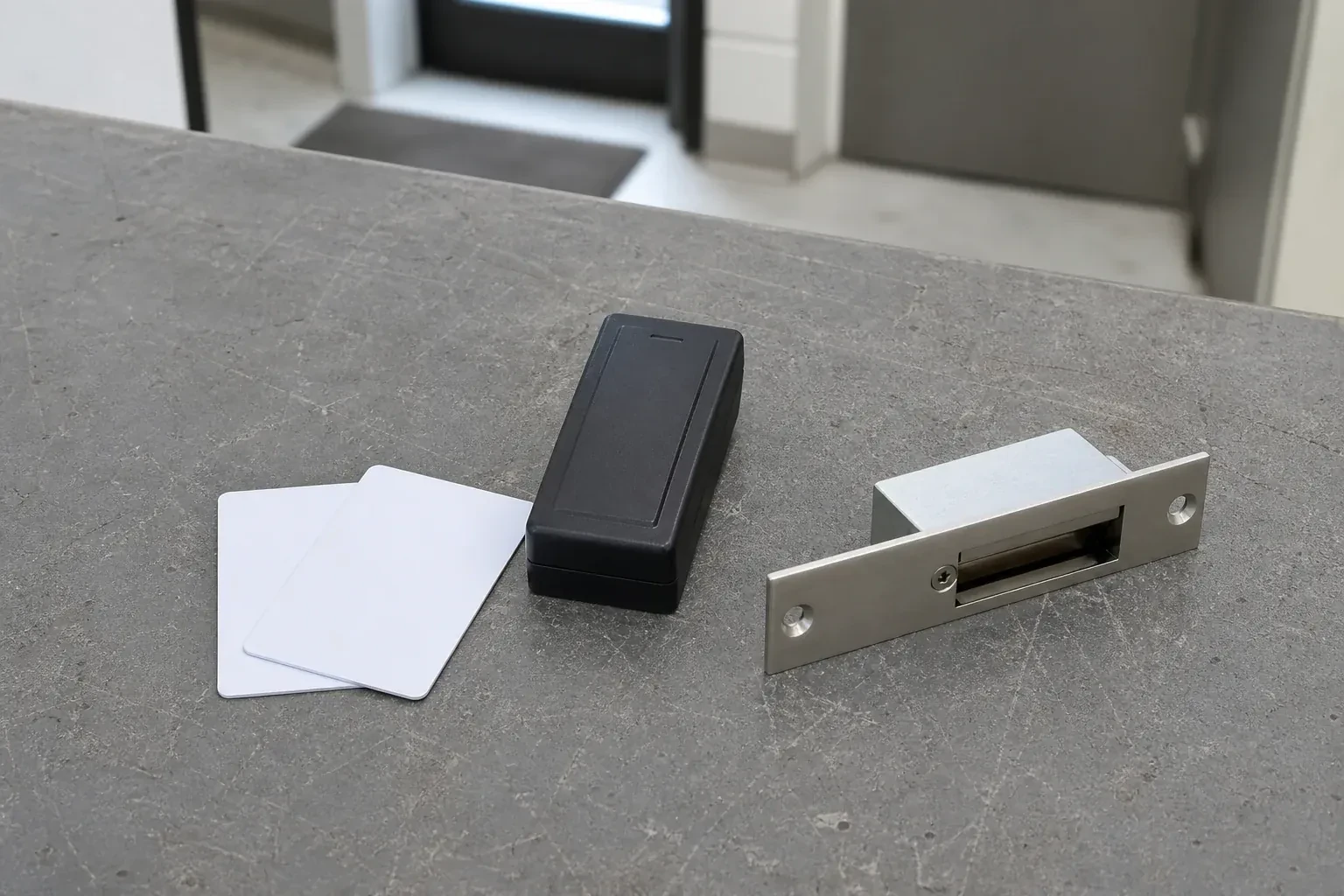
A door that leads outside along a path people use to leave the building gets special attention, no matter what lock currently sits on it, so the survey flags every one of those openings early. On an exit door, a magnetic lock only gets considered alongside a request-to-exit device and a tie-in to the fire alarm system, while an electric strike paired with a standard latch usually needs no extra hardware to let people out. Sorting exit doors from interior doors before any hardware is ordered keeps a smooth, one-motion exit part of the plan from day one rather than a fix added afterward.
Setting up schedules and access levels
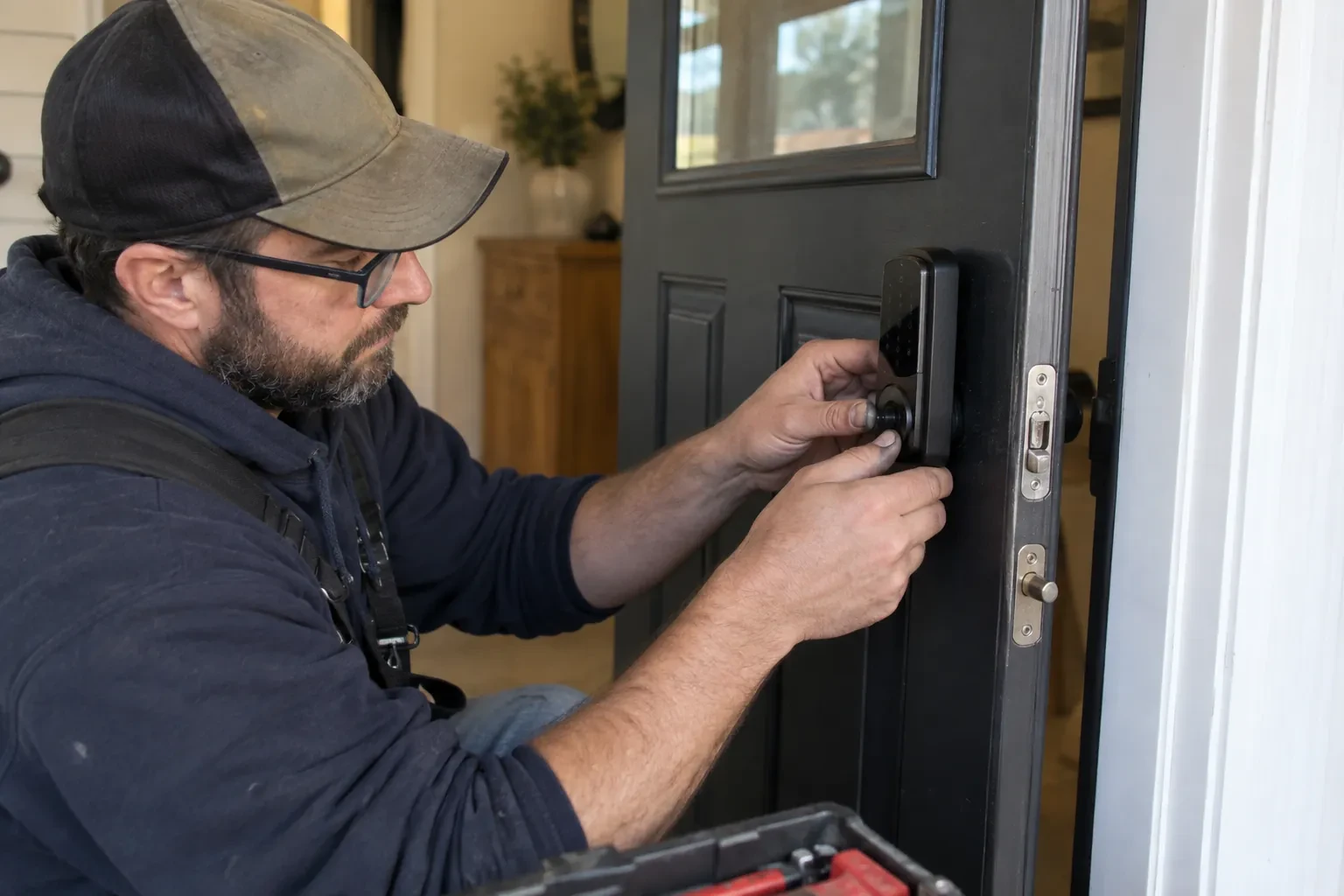
With the wiring finished, the work moves to the controller's software: schedules for regular business hours, another schedule for a loading dock or an after-hours cleaning crew, and access levels that group doors by who is allowed through them. A manager's credential might sit in every access level, while a new hire's sits in only the one or two the role actually needs. Holidays are entered so a schedule does not unlock a door on a day the building is closed, and the whole configuration is saved before any credential is issued against it.
What to do when a card or fob goes missing
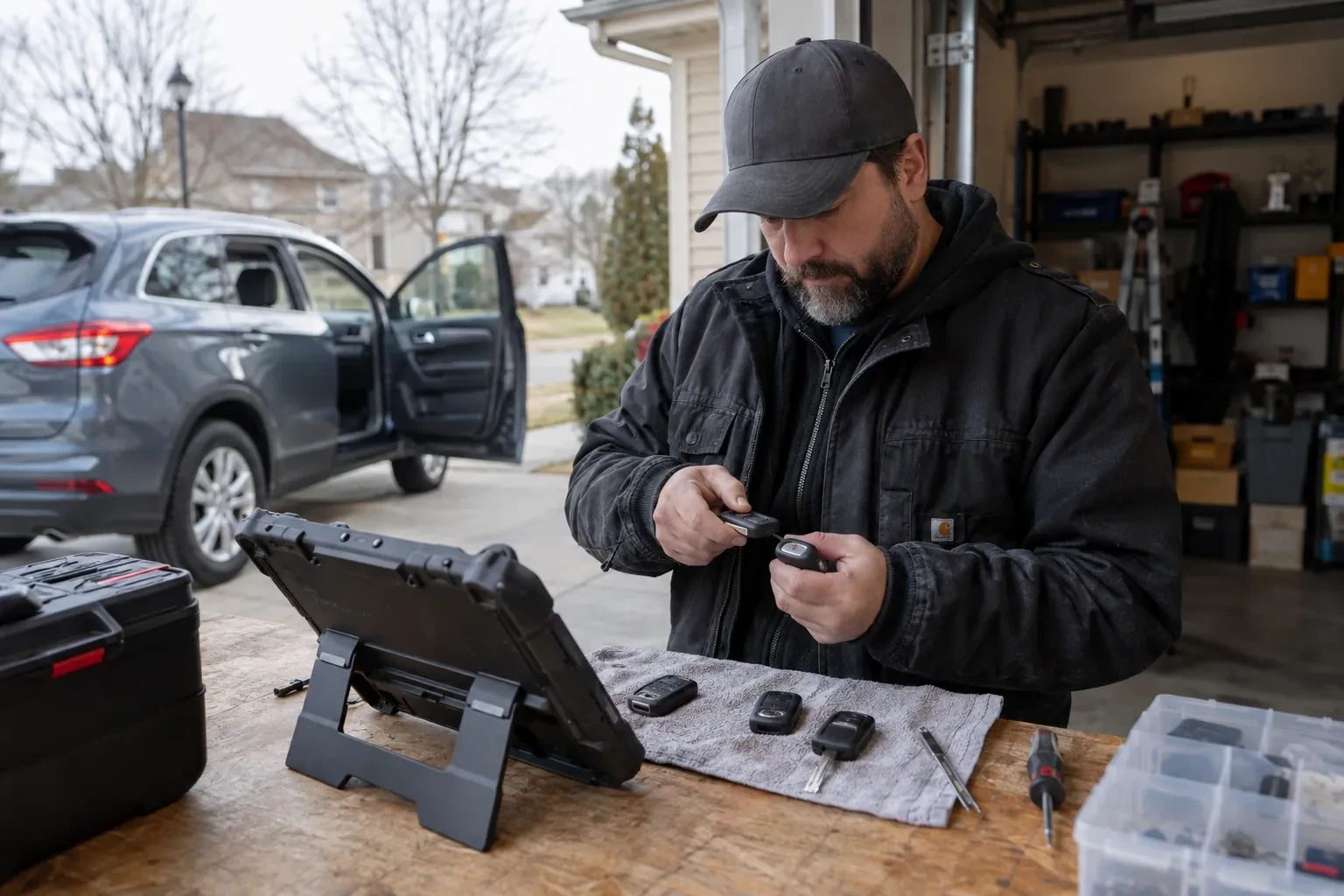
A lost card or fob is handled by switching it off in the software rather than replacing a lock. The credential stops working as soon as it is disabled, whoever lost it is issued a new one, and every other door in the building keeps running exactly as it did before. There is no locksmith call needed for this, no rekeying, and no gap where a door sits unsecured while a replacement is arranged. Reporting a lost credential without delay, rather than holding onto the news, is the one habit that keeps this advantage working the way it was intended.
Access Control Installation
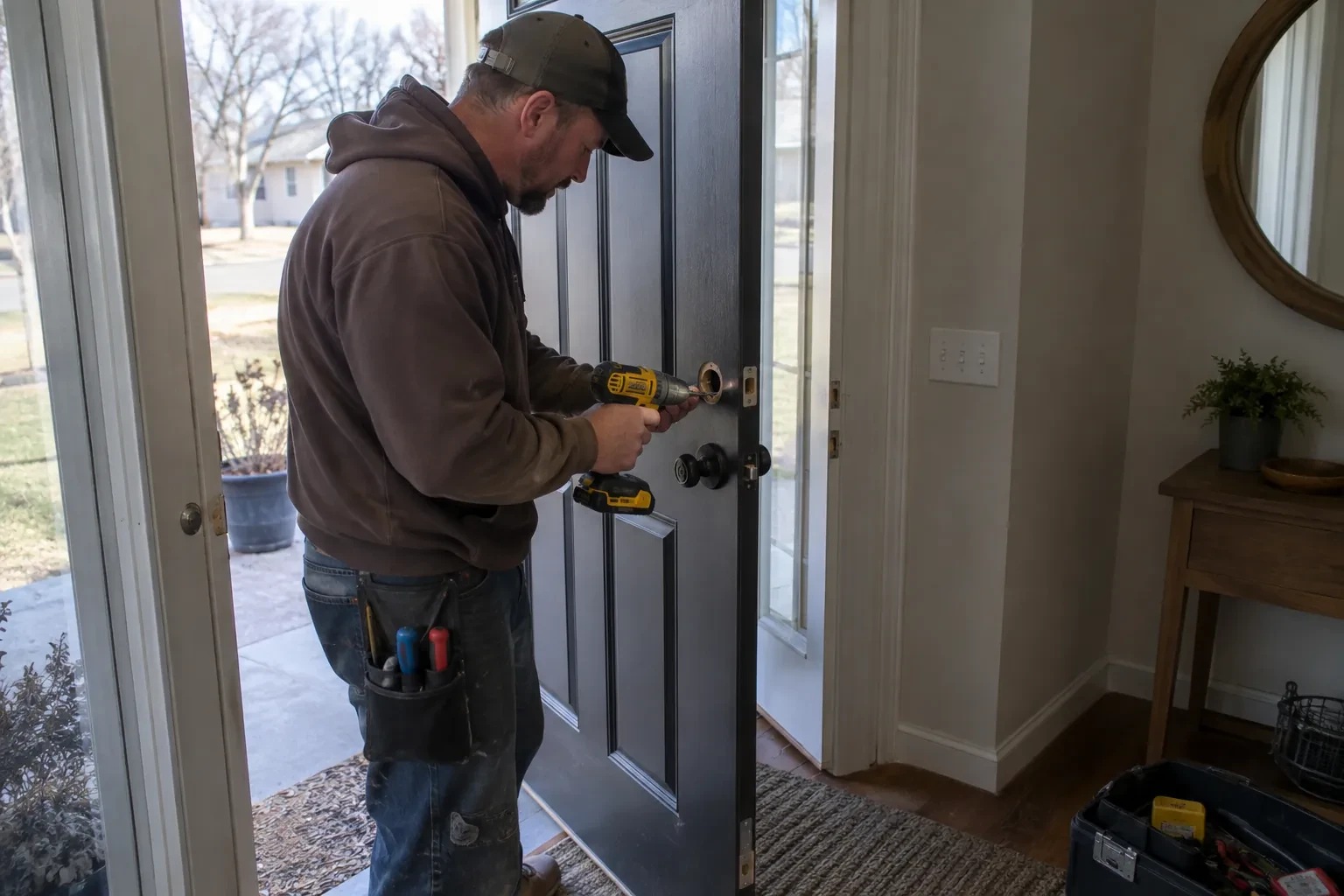
In the van
Mechanical override cylinders
Credential cards and fobs
Power supply with battery backup
Access control panel
Electric strikes
Access Control Installation
What affects the quote
How many doors are being controlled
A single entrance and a building with a dozen openings are different jobs in scale rather than kind, and the number of doors, readers and locks involved is the largest single factor in sizing the work.
Electric strike or magnetic lock
An electric strike works with the door's existing latch and generally needs less additional hardware than a magnetic lock, which also calls for a request-to-exit device and, on an exit door, a fire alarm tie-in.
The building's age and frame material
A modern hollow metal frame generally accepts new hardware with less adjustment than an older wood frame or a historic building, where matching the existing appearance and construction takes extra care.
What to have ready
- Which doors do you want to control with the new system?
- Do you want cards, fobs, keypad codes, or a mix of these?
- Is there an existing keypad or card system on any door now?
Access Control Installation: questions
QuestionsCan access control be added to just one door, or does it have to cover the whole building?
A single door with its own standalone reader is a complete installation on its own, and plenty of businesses start there. If more doors need controlling later, a networked controller can be added at that point, or the building can simply add another standalone unit. Nothing about starting small commits the business to expanding, and nothing about a single-door job rules out growing the system later.
What information should we have ready before the visit?
It helps to know which doors should be controlled, roughly how many people will need a credential, whether any of those doors are also fire exits, and who in the business will administer the system afterward. A floor plan or a walk-through on site fills in anything easier to show than describe, and neither is required in advance.
Will this work with our existing alarm or camera system?
In most cases, yes. An access control installation can be planned to share information with an existing alarm panel, so an arm-or-disarm event lines up with whoever unlocked the door, and with a camera system, so a recorded clip can be matched to a specific credential rather than only a timestamp. The exact integration depends on what the existing alarm and camera equipment support.
Related services
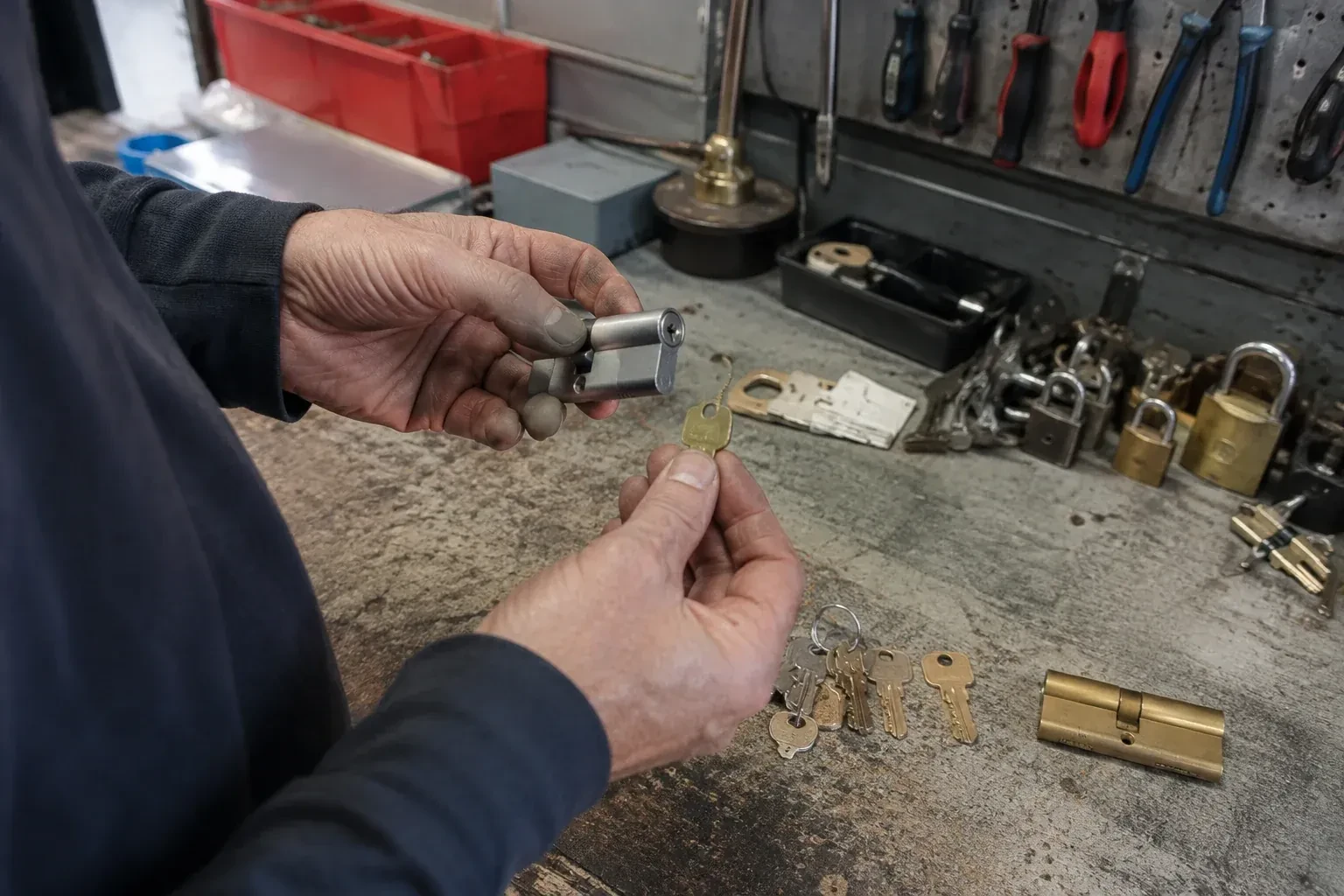
- Master Key System DesignA property manager taking over a small commercial building inherits a shoebox of keys with no labels and no chart.
- Panic & Exit HardwareThe new access-control reader at the staff entrance works fine going in, but nobody has sorted out the door's exit side, and right now a card reader and a pushbar exist as two separate ideas.
- Commercial-Grade Lock ReplacementOvernight someone forced the back door, and the cylinder face is scarred, the metal around the strike has pulled loose from the frame, and the latch no longer sits flush.