Lockouts · Oakville
Broken Key Extraction
The key went in like any other morning, you turned it, and something gave with a small metallic click.
In plain words
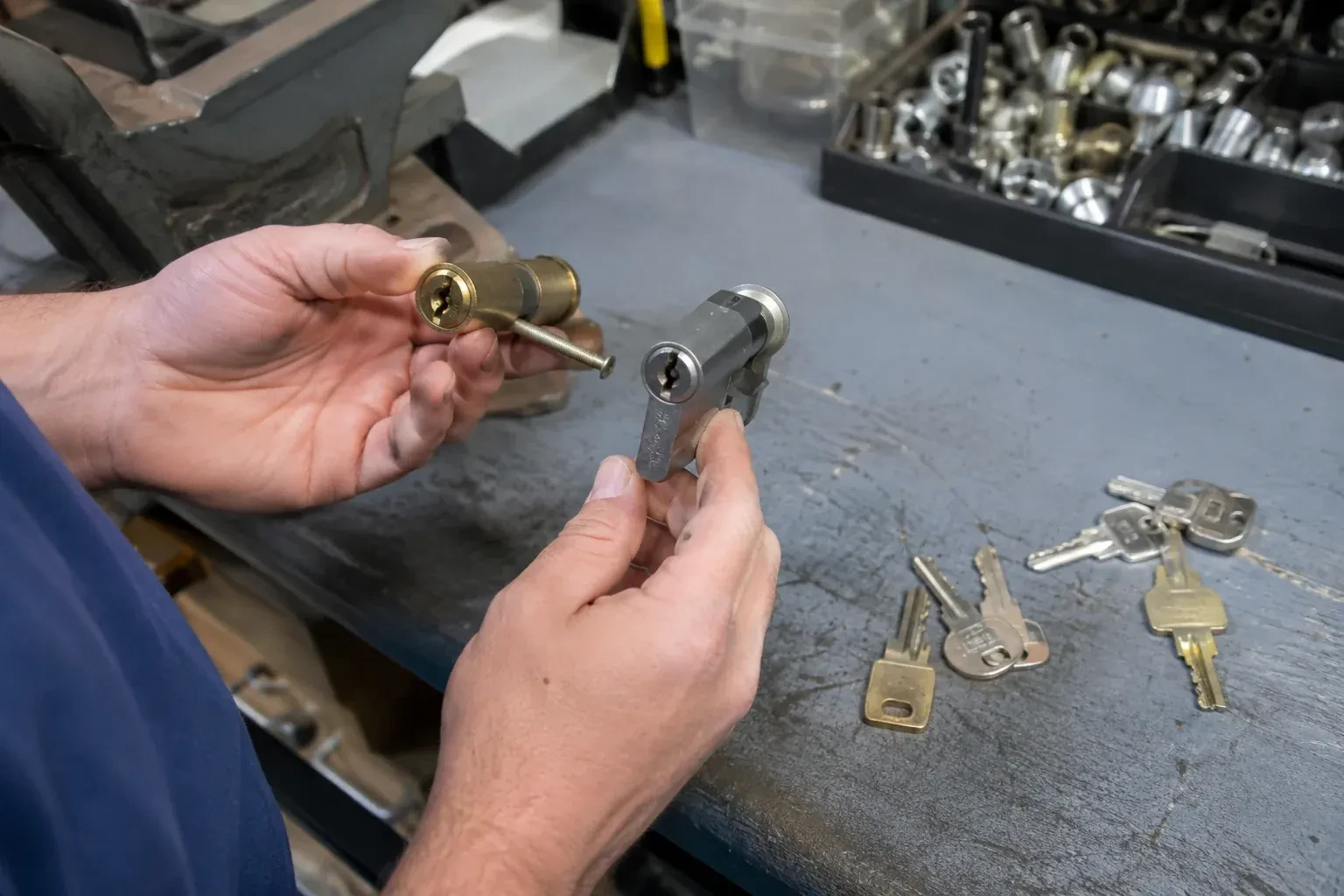
The tools are simple and precise. A hook extractor is a thin strip of spring steel with a barb at the tip; it slides along the groove of the keyway above or below the fragment, snags one of the cuts, and walks it out. A spiral extractor works like a tiny screw, threading into the ridges of the cuts and gripping as it turns. Fine-tipped extractor pliers handle a piece that shows above the face. A tension tool brings a turned plug back to rest. None of these push inward, which is the whole point: the piece comes out the way it went in and the cylinder stays whole.
How the visit goesThat key had been bending a little for years, and you kept straightening it. Today it finally cracked at the deepest cut. The stub is in the lock, and the spare you found goes in a few millimetres and stops against it.
Broken Key Extraction
How the visit goes
Confirming the lock is yours to open
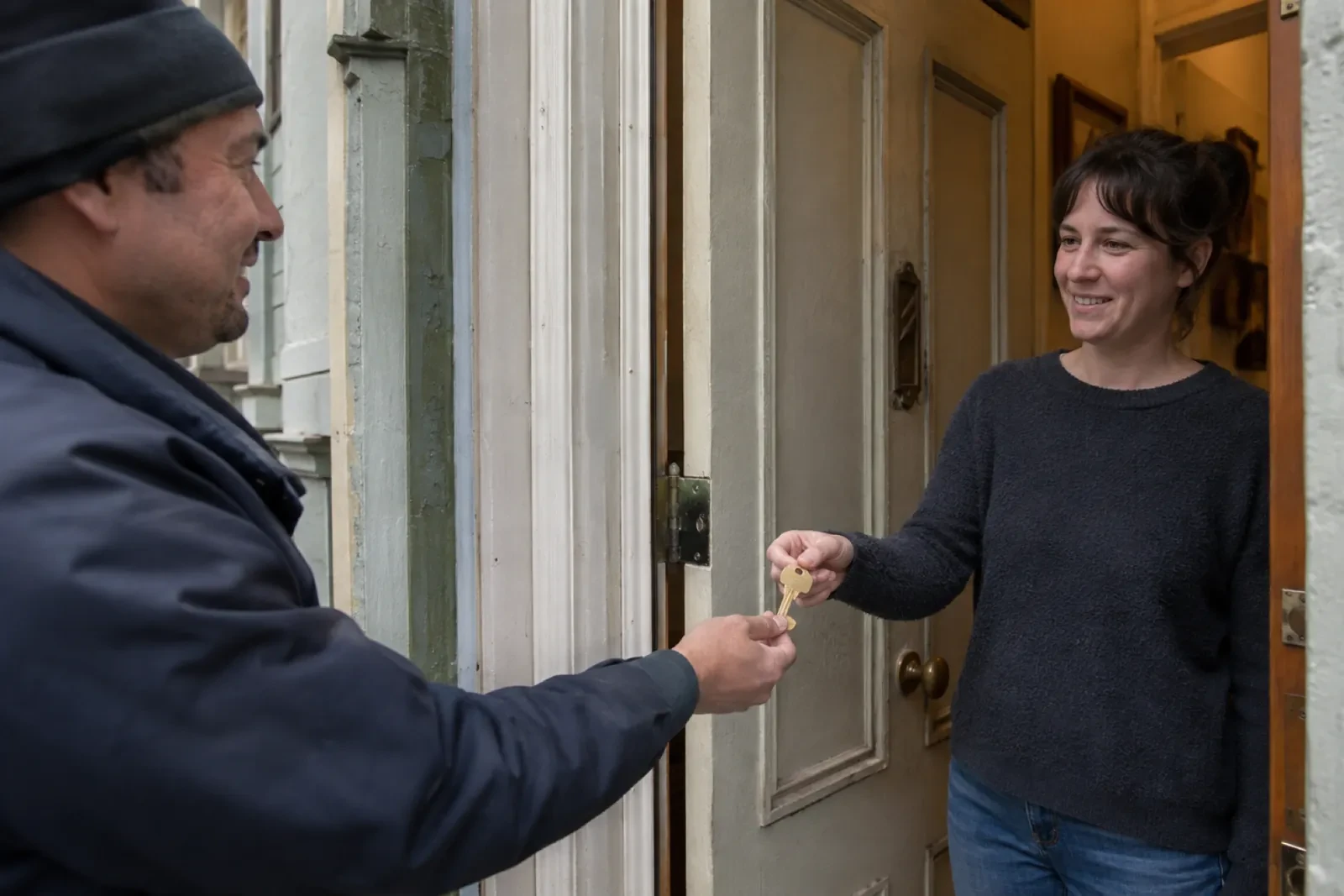
Extraction is an entry service in everything but name, so it starts the way a lockout does: the locksmith establishes that whoever is asking is entitled to the door, padlock or vehicle. For a home that means photo identification plus a document linking you to the address: a lease, a utility statement, or the property manager vouching for you. For a car it is the registration or ownership papers and matching identification. If your wallet is behind the door, say so, and the check is finished once you are inside. It takes a minute, protects every neighbour on the street, and is a sign you have called the right kind of tradesperson.
Bringing the plug back to rest
Nothing slides out of a rotated plug, because the pins that the key lifted are still sitting at the shear line and holding the blade. So when the key snapped mid-turn, the first job is to return the plug to its resting position. The locksmith applies gentle rotational pressure with a tension tool, feeling for the point where the pins drop back into the plug and the keyway lines up with the cylinder body. Sometimes a light tap on the face helps the pins settle. Only once the plug is at rest is the fragment free to move, and only then do the extractors go in.
A door that no longer fights the key
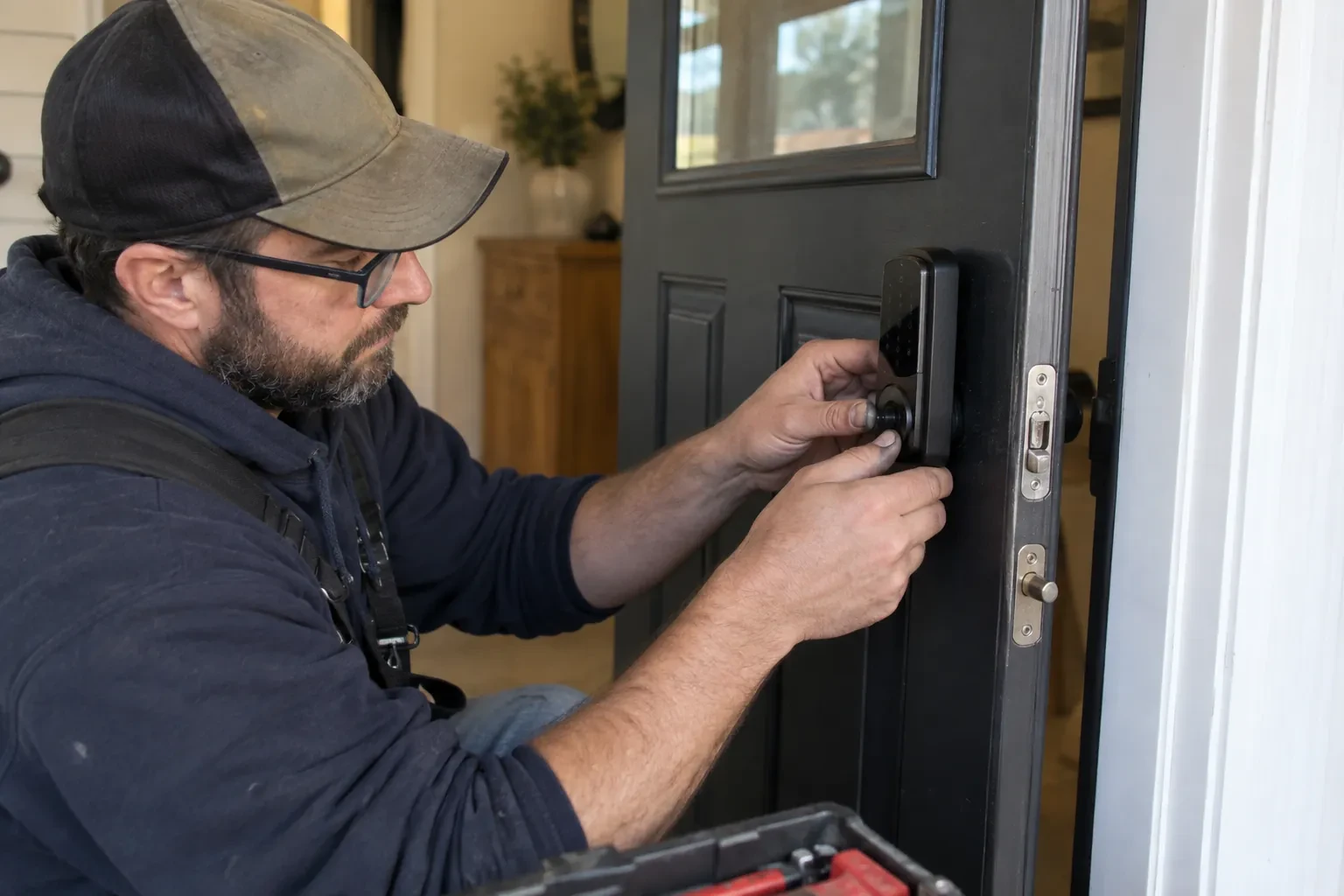
If the bolt had been dragging in its strike, that is corrected while the locksmith is there, because a bolt that binds turns every key into a lever. Dropped hinges get longer screws driven into the framing; a strike pocket that pinches the bolt is filed or shifted; a weatherstrip that was pushing the door off square is pared back. The test is simple: the thumb-turn should throw the bolt with one finger and no push on the door. Since wood swells in humid summers and shrinks in dry winter air, a seasonal glance at the screws keeps the key from taking the strain again.
Broken Key Extraction
In the van
Plug follower and cap tool
Vehicle key blades and chip shells
Compressed air for the keyway
Replacement cylinder or deadbolt
Manufacturer-approved cylinder lubricant
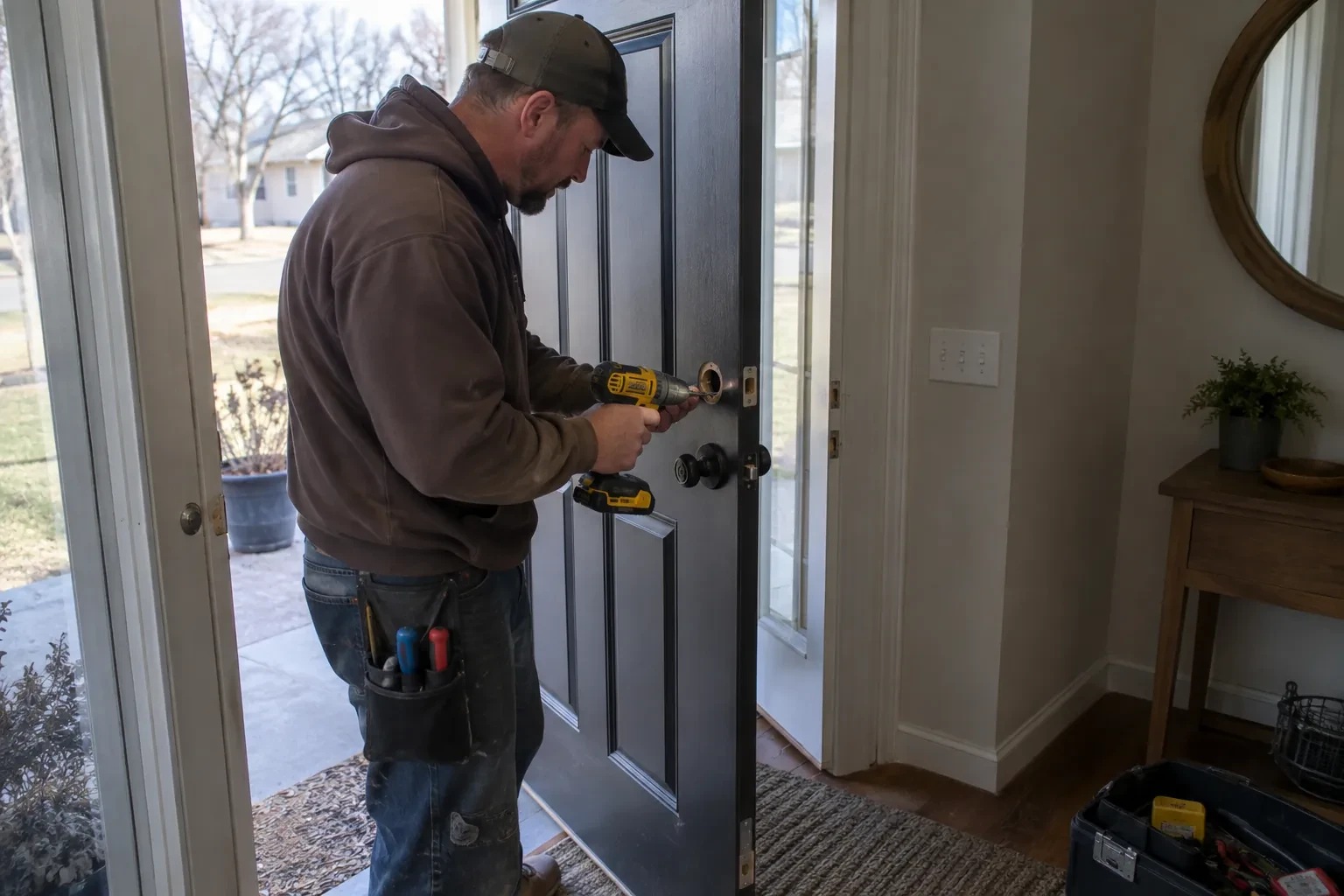
Broken Key Extraction
What affects the quote
Drilling and a replacement cylinder
On the rare occasion a cylinder must be sacrificed, the price includes the new cylinder or complete deadbolt plus fitting it, and that is agreed with you before the drill is picked up.
Rekeying other doors to match
If the cylinder ends up rekeyed or replaced, matching the other exterior locks to the new key is priced per cylinder, and simplest while the locksmith is already there.
Removing the cylinder to free it
A deep or bound fragment may need the cylinder taken off the door and the plug pushed out from behind on the bench. That disassembly and reassembly is quoted on its own.
What to have ready
- Has anything been put into the keyway since, such as tweezers, glue or another key?
- Did the key turn part of the way before it snapped?
- Was the lock frozen or the door swollen when it happened?
Broken Key Extraction: questions
QuestionsPart of the key is sticking out. Can I just pull it with pliers?
If a good length shows and the plug is at its normal rest position, a firm straight pull sometimes works. The risk is pushing instead of pulling, or twisting, which drives the piece deeper and can bend a pin. If it does not come on the first gentle try, stop there and leave it for extractor tools, which grip the cuts without loading the cylinder.
My car key snapped in the door. Is that a locksmith job?
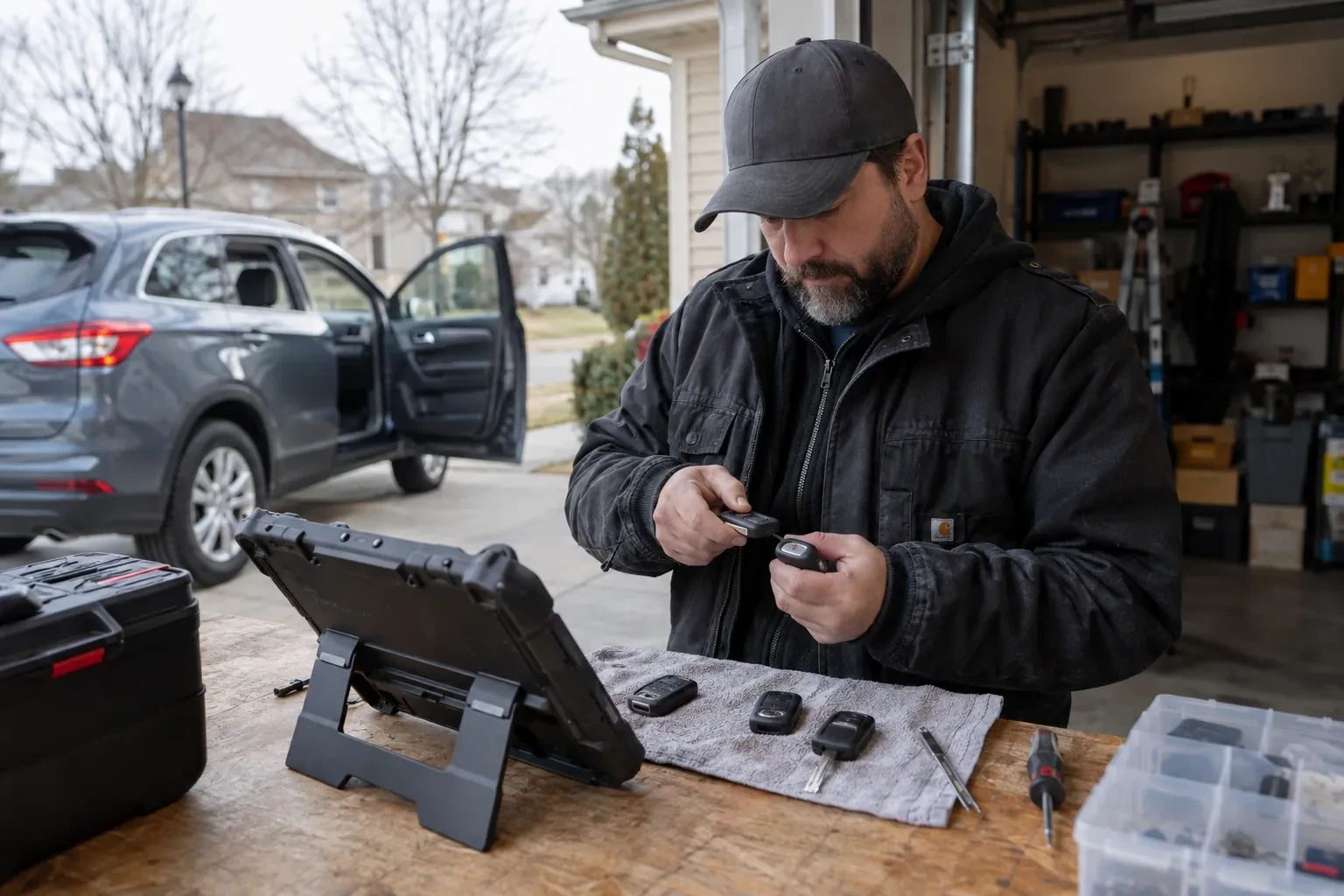
Yes. Vehicle door locks and ignitions use wafer cylinders that respond to the same extractor tools. Once the blade is out, the plastic head you are holding, which carries the transponder chip and any remote buttons, can usually take a freshly cut blade so the car keeps recognizing it. The ignition is checked as well, since a broken key sometimes disturbs the wafers.
What lubricant should I use on the lock afterwards?
Whatever the lock's own maker specifies, since cylinders differ: many call for a dry graphite or PTFE spray blown into the keyway and worked in with the key, once or twice a year, while others prohibit graphite and specify their own product instead. General-purpose oils, grease and sprays feel smooth at first but on most cylinders collect dust and clog the pins, which leads back to the sticking that breaks keys. A little goes a long way; too much of any lubricant can also hold moisture.
Related services
- Business Lockout ServiceA cook stepped into the alley with the recycling and the rear door swung shut behind him.
- Break-In Damage Lock RepairSomeone smashed the little window beside the door, reached in and turned the thumb-turn.
- Seized & Jammed Lock OpeningThe old mortise lock on the front door of the house turns the key halfway and stops with a dull clunk.