Commercial · Oakville
Commercial Rekeying
The drawer behind the counter holds a tangle of keys with tape labels: front old, side, Dave.
In plain words
A business hands out keys as people join and rarely gets every one back as people leave. Rekeying resets that count. Instead of guessing how many copies of the front-door key exist, the cylinders are repinned so only the newly cut set works, and those keys are numbered and signed for. Where turnover is steady, the locksmith can fit interchangeable cores, which let a manager swap a core with a control key in a couple of minutes when someone departs, so the reset becomes routine rather than an event. Either way you end up with a premises where the keyholder list matches the staff list.
How the visit goesA break-in overnight took the cash float and a staff member's bag with her work keys inside it. The glass is being replaced this morning, but the key that opened the door yesterday will still open it tonight unless the cylinders are changed.
Commercial Rekeying
How the visit goes
Reading the keys that already exist
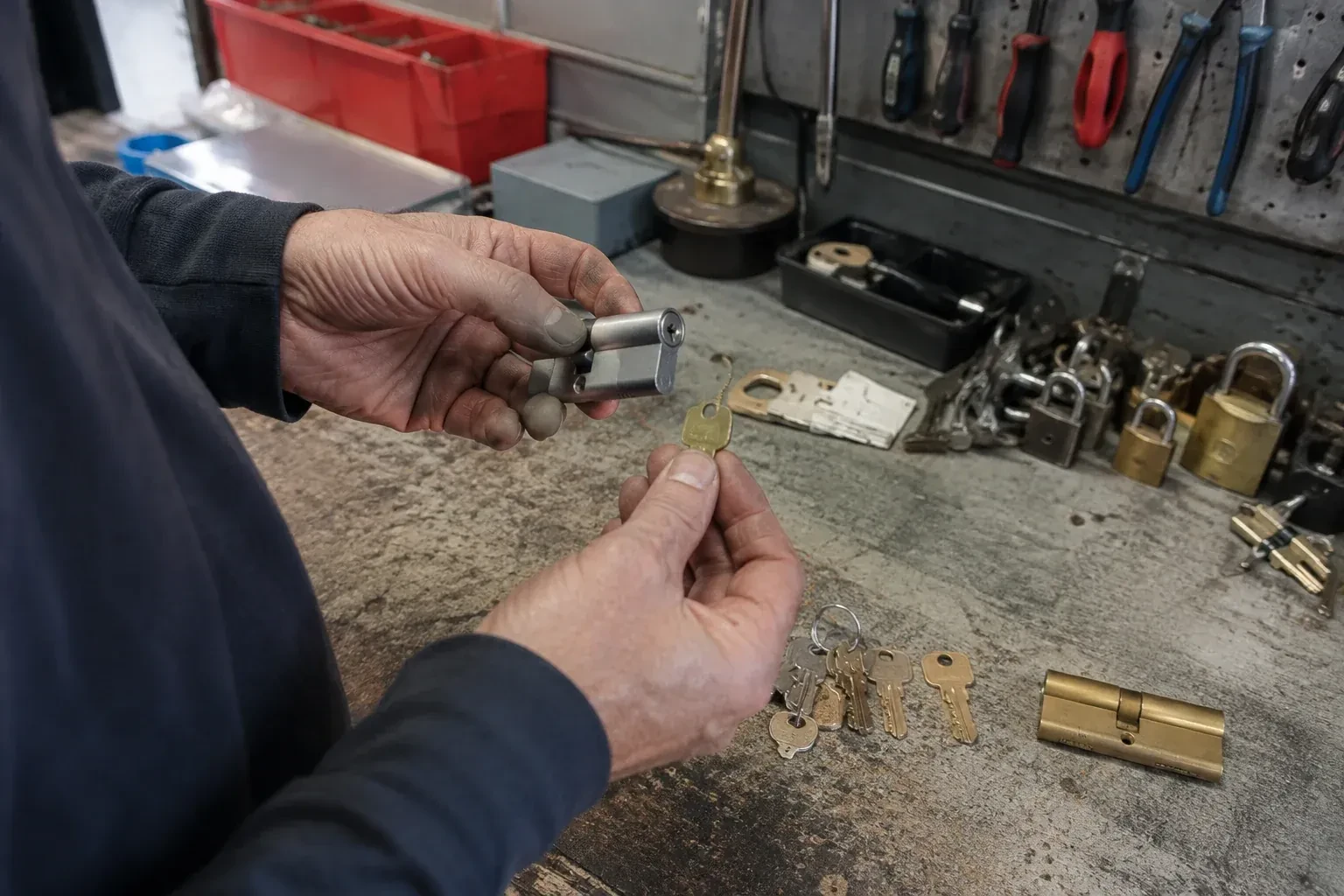
Before deciding anything new, it helps to understand the old. Gather every key the business can find, including the ones with faded tape labels, and the locksmith reads them against the cylinders on the walk. Some will turn out to be duplicates of each other, some will belong to hardware that was replaced years ago, and some may operate doors nobody expected them to. Hardware-store copies stand out by their blanks and by the way they wear. This reading shows how far the key count has drifted and whether an old master still exists, and it lets the new plan retire everything found in the drawer rather than only the keys anyone remembered.
Repinning a standard cylinder
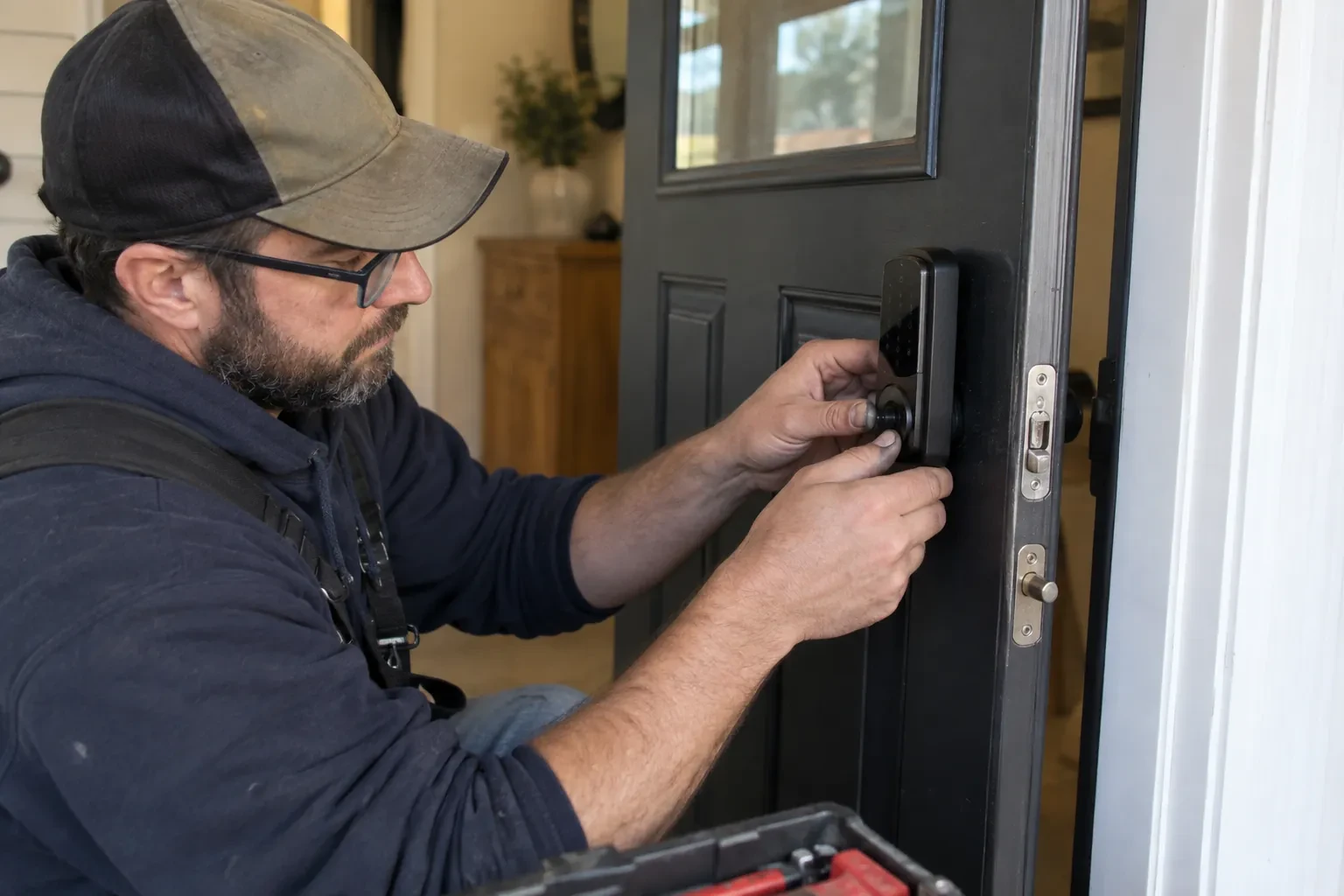
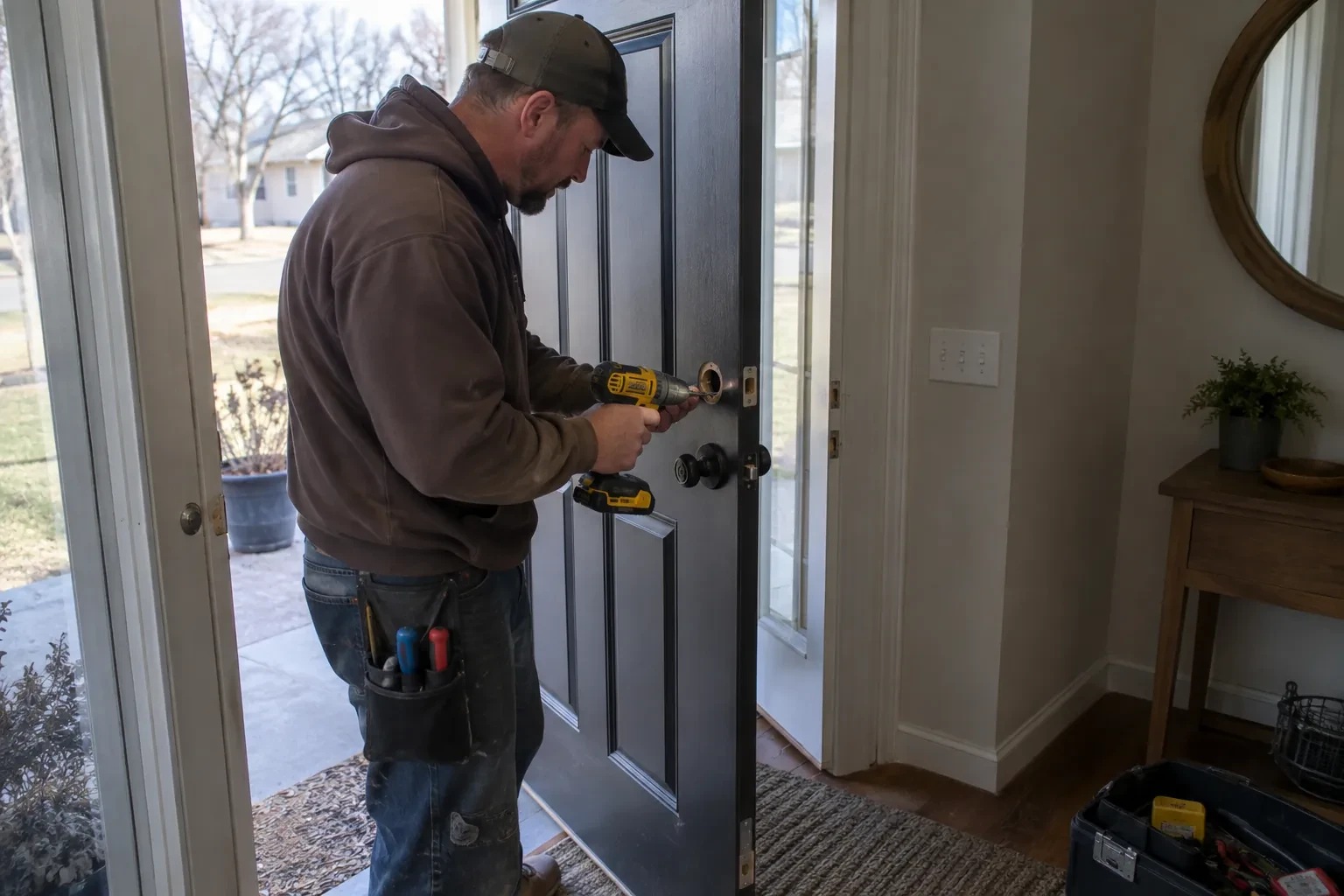
The cylinder is taken off the door and its plug is slid out with a follower, a small tube that holds the top pins and springs in place so nothing scatters. The old bottom pins are tipped out, and a new combination is chosen from the pinning records so it does not collide with any other key in the plan. Fresh pins of the matching depths are dropped into each chamber, the plug goes back in, and the new key is tried: it should turn as smoothly as if the lock were new, and the old key should stop dead. The cylinder is then refitted and adjusted so the cam or tailpiece throws the bolt fully.
Exits that still open the way they must
Rekeying changes who can come in; it never changes how people get out. Every exit door and every door on the way to one is left opening from the inside with a single motion and no key. On a door with a panic bar, the outside cylinder simply controls entry, and the bar keeps working exactly as before. Once the locksmith has finished, walk the exit routes yourself, push each bar and turn each thumb-turn, and make that walk a habit at the start of every season so a new deadbolt or a helpful padlock never creeps onto an exit.
Commercial Rekeying
In the van
Rekeyable padlocks
Key stamp set and tags
Dry graphite or PTFE lubricant
Mortise cylinder set screws and cams
Code key machine
Commercial Rekeying
What affects the quote
After-hours or split visits
Work done after closing, before opening or split across two visits to suit trading hours costs the same amount as a single daytime block. The exact figure is confirmed on site once the number of cylinders and the keying plan are known.
Documentation and register
A keying chart, a key register and stamped codes on every key are part of a proper commercial rekey, and the quote names the paperwork so it is never skipped.
How many keys are cut
Each key cut to code and stamped is counted into the quote. Two per door group for a small shop and forty for a warehouse shift are different numbers.
What to have ready
- Are any cylinders stiff, loose or hard to turn at the moment?
- Which staff need to open which doors on a normal day?
- Which doors, if any, belong to the landlord or a shared corridor?
Commercial Rekeying: questions
QuestionsWhat is the difference between rekeying a business and replacing its locks?
Rekeying keeps every lock on the door and changes only the pins inside the cylinder, so a new key works and the old ones stop. Replacing swaps the hardware itself. Commercial cylinders are made to be repinned many times, so rekeying suits any lock in sound condition and leaves the levers, trim and door untouched. Replacement is chosen door by door for cylinders that are worn, corroded or too light for what they protect.
What is a master key system and does a small business need one?
In a master key system each lock accepts its own change key and also a master key above it, so a manager carries one key while staff carry keys that open only their own doors. Small businesses with three or four doors often manage without one. A master earns its place once there are several rooms with different people in them, or several locations, and the owner would otherwise carry a ring of keys.
How often should a business change its keys as a matter of routine?
There is no fixed interval. Rekey on events rather than on a calendar: a key not returned, a lease change, a break-in, a renovation crew finished, or a key count that no longer matches the register. Businesses with a good register and a restricted keyway often go years between rekeys because nothing prompts one. A yearly check of the register against the keys on the hook is the habit that tells you when the time has come.
Related services
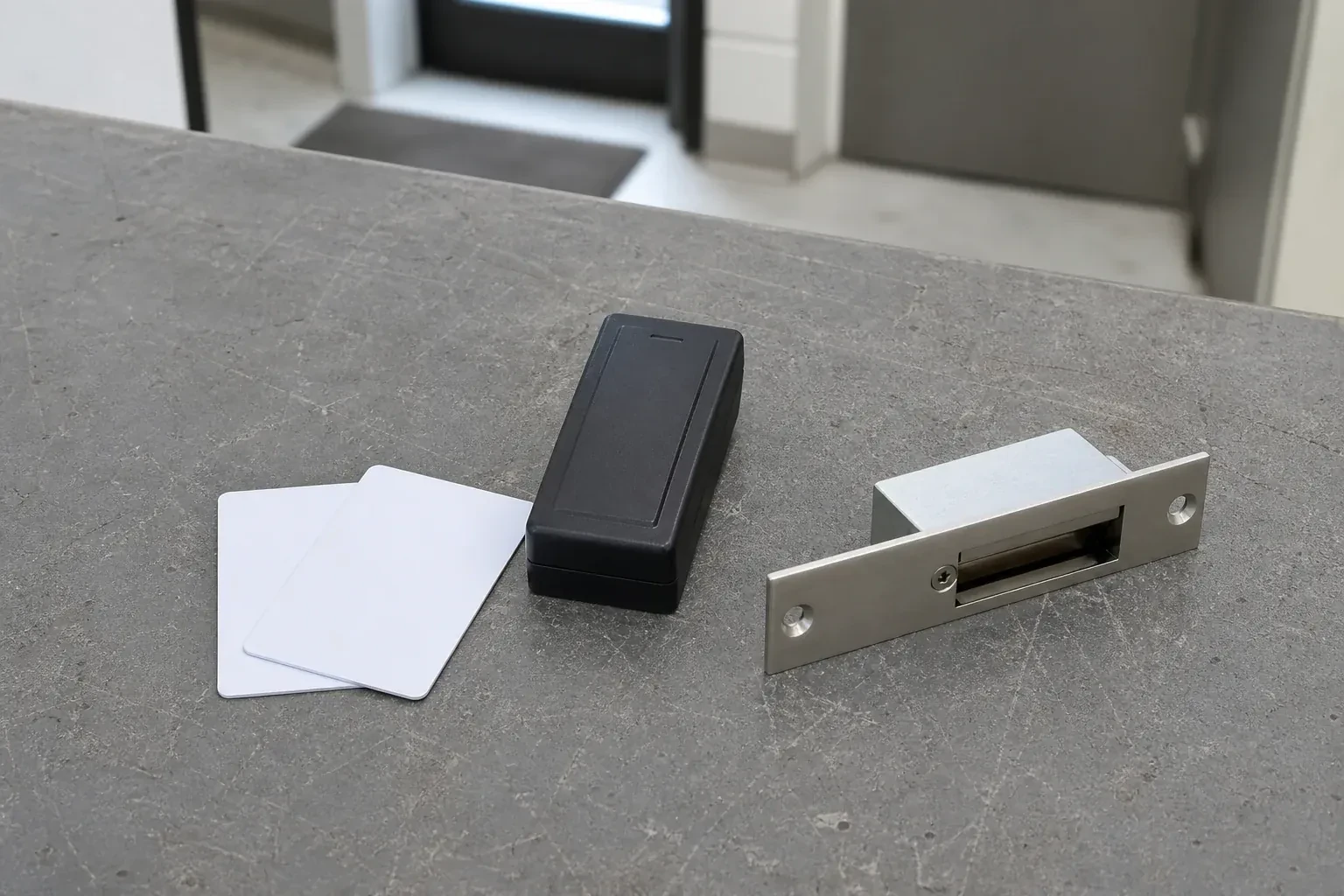
- Access Control InstallationYou just leased the empty unit next door and want the new tenant to open their own suite without a key to yours, to the loading dock, or to the electrical room down the hall.
- Panic & Exit HardwareThe new access-control reader at the staff entrance works fine going in, but nobody has sorted out the door's exit side, and right now a card reader and a pushbar exist as two separate ideas.
- Commercial-Grade Lock ReplacementOvernight someone forced the back door, and the cylinder face is scarred, the metal around the strike has pulled loose from the frame, and the latch no longer sits flush.