Lockouts · Oakville
Break-In Damage Lock Repair
Someone smashed the little window beside the door, reached in and turned the thumb-turn.
In plain words
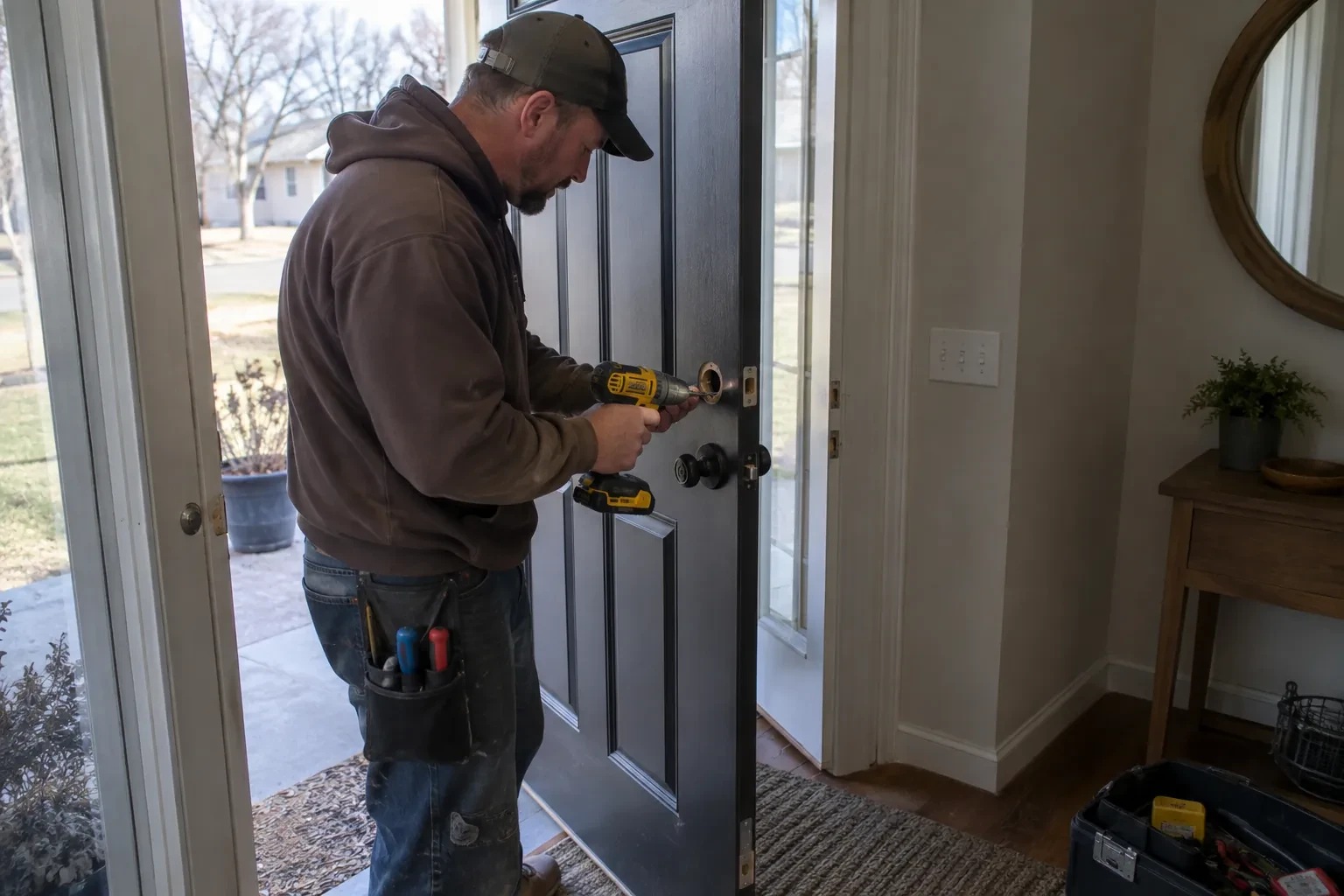
There are really two jobs inside one call. The first is tonight: make the door close and lock so the household can sleep. Where the door and frame are sound that means a new lockset or cylinder; where the jamb has split it means a repair plate over the break or a board across the opening, always arranged so the door still opens from inside without a key. The second job is the permanent repair, often the same visit: a reinforced strike box, long screws into the stud, a strengthened door edge and a deadbolt with a full throw. Both are quoted separately so you decide what happens when.
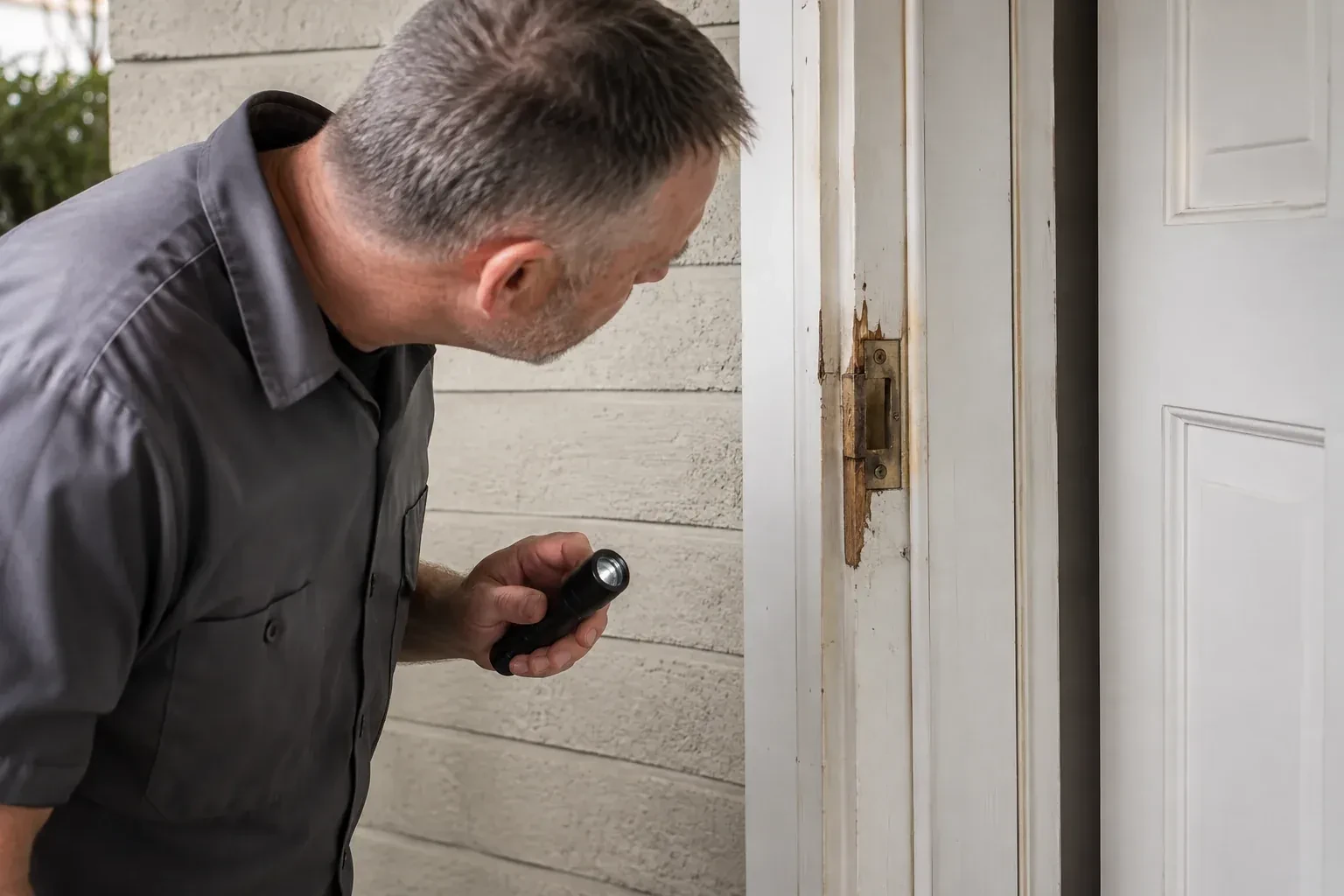
How the visit goesThe back door looks closed until you touch it. The edge is crushed where a bar went in, the latch is bent sideways, and the door swings free with a gentle push no matter how you turn the key.
Break-In Damage Lock Repair
How the visit goes
Lock, frame or door: which one failed
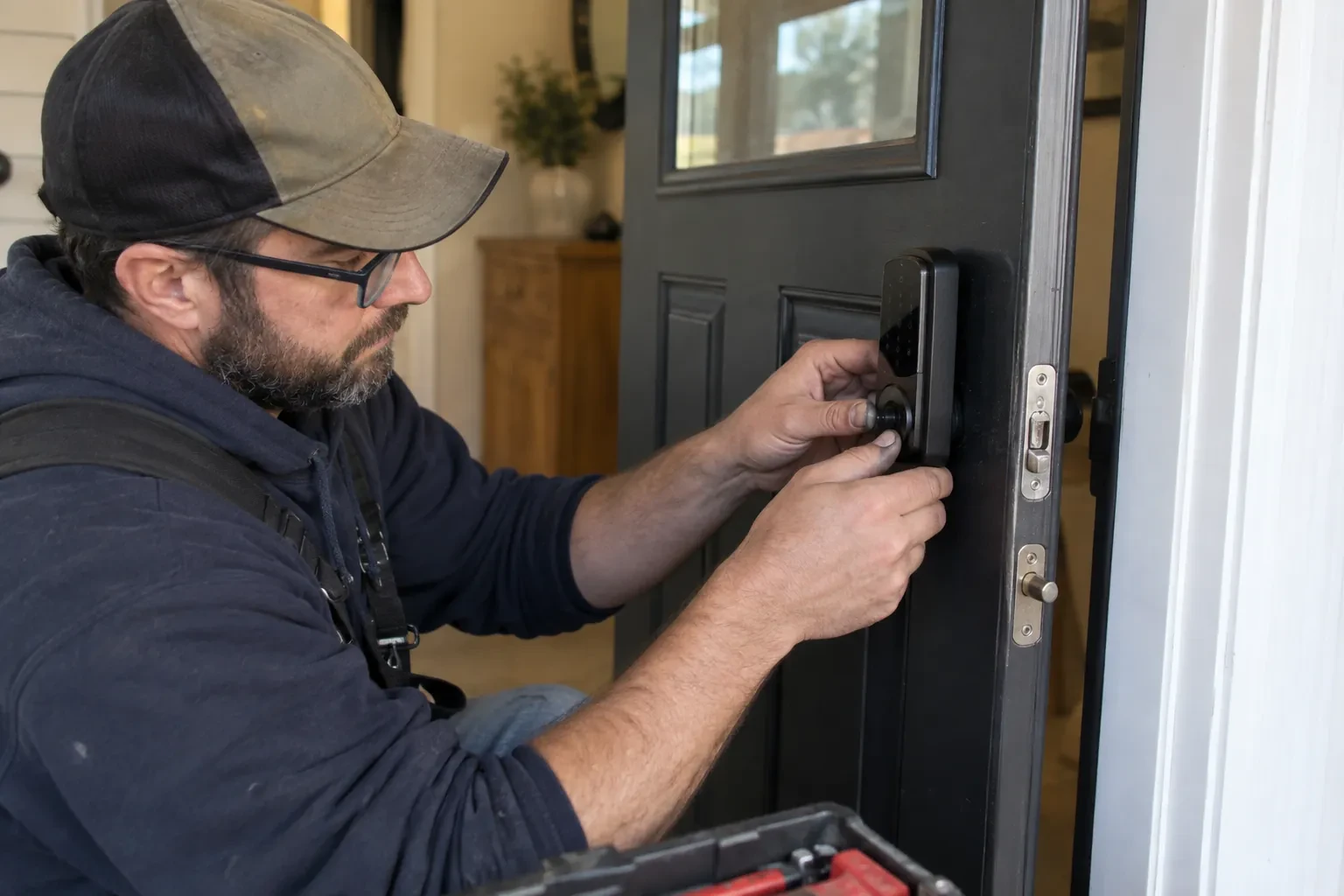
Three components can fail in a forced entry and they are repaired differently, so the locksmith sorts them out before quoting. Lock failure is a broken cylinder, bolt or latch and is answered with hardware. Frame failure is a torn strike or split jamb and is answered with a boxed strike, repair plates, long screws and sometimes new wood. Door failure is a crushed edge, a split around the bore or a bent hinge leaf and is answered with edge reinforcement or, when the slab itself is broken, a door installer. Naming which of the three happened, and often all three, shows you what the locksmith completes tonight and what is handed to another trade.
Repairing a split jamb
A jamb that has split along the grain can often be saved. The loose section is pressed back into place and glued with a two-part wood epoxy that cures harder than the surrounding wood, then clamped while the strike box is fitted through it into the stud so the screws hold the repair as well as the strike. Missing wood is built up with filler or a fitted piece of matching stock and dressed flush. When the jamb has pulled away from the framing along its length or shattered around the pocket, the locksmith says so and arranges a new jamb leg through a carpenter, with temporary securing to see the household through until then.
A door that closes and locks again
The visit ends with the door tested the way it will be used. The bolt is thrown and withdrawn with the door open, then closed, and it must slide home without dragging on the strike or stopping short of full extension. The latch catches when the door is pushed to, not slammed. The door meets its weatherstrip evenly and the thumb-turn works from inside without a key. You try it yourself before the locksmith packs up, with your own new key, so the first time the household locks up that night is not the first time anyone has tried the door.
Break-In Damage Lock Repair
In the van
Grade 1 deadbolt with one-inch throw
Two-part wood epoxy and shims
Replacement cylinder or core
Security strike box
Anti-lift blocks and foot bolt
Break-In Damage Lock Repair
What affects the quote
Door and frame material
A wood jamb over a stud takes standard reinforcement. Steel frames, jambs on masonry, fibreglass doors and aluminum storefront stiles each need their own fasteners and methods, which changes both labour and parts.
Door edge reinforcement
A wrap-around edge reinforcer is added when the wood around the bore is crushed or split. It is a separate part, chosen to suit the door thickness and the hardware going into it.
Lock failure or frame failure
Replacing a lock is hardware and fitting time. Rebuilding a strike side with a boxed strike, epoxy and long screws into the stud is carpentry as well, and is quoted as its own line.
What to have ready
- Are there other doors or a garage entry on the same key?
- Have the police been called, and do you have an occurrence number?
- Do you own the property, rent it or manage it for someone else?
Break-In Damage Lock Repair: questions
QuestionsI rent. Who arranges the repair, and can I change the lock myself?
Tell your landlord or property manager as soon as the police have been called; provincial tenancy law makes the landlord responsible for repairs to the unit, and most will arrange the locksmith. A tenant may not change locks without the landlord's agreement, and a landlord who changes them must give the tenant keys, so the visit is coordinated between you. If you arrange securing yourself in an emergency, keep the receipt and the record of what was done for both sides.
Do longer screws really make a difference?
A large one. Factory strike and hinge screws are usually short enough to grip only the jamb, a piece of trim about an inch thick. Three-inch screws pass through the jamb and the gap behind it into the stud, so a blow has to move the wall rather than the trim. Lock manufacturers supply reinforcement plates with three-inch screws for exactly this reason, and note that a door beside a sidelight needs a different arrangement because glass sits where the stud would be.
My condo entry door is a fire-rated door. Does that change the repair?
Yes, in a good way. A suite door that opens onto a corridor is meant to close and latch on its own every time, so the repair uses hardware suited to a labelled fire door, keeps the self-closing device adjusted and operating, and adds no holes or plates the label does not allow. The building's manager is normally involved, and the locksmith works with the door's rating rather than around it.
Related services
- Business Lockout ServiceA cook stepped into the alley with the recycling and the rear door swung shut behind him.
- Broken Key ExtractionThe key went in like any other morning, you turned it, and something gave with a small metallic click.
- Seized & Jammed Lock OpeningThe old mortise lock on the front door of the house turns the key halfway and stops with a dull clunk.