Car keys · Oakville
Motorcycle & Scooter Keys in Oakville
You dig through every jacket pocket and the tank bag twice, but the ignition key that always sits on the same ring is nowhere to be found.
In plain words
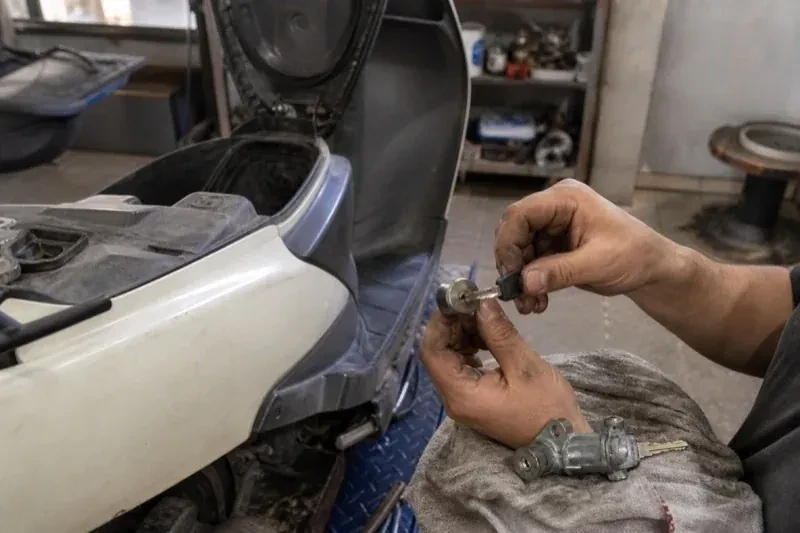
A motorcycle rarely has just one lock. The ignition and steering are usually paired, the seat has its own latch, and older machines add a keyed fuel cap, each of which may or may not share a cut with the others depending on how the factory keyed it. Key service starts by mapping which locks are on the machine and which of them the owner wants running from a single key, and bringing a seat or fuel-cap lock onto the ignition's cut is common where those cylinders are compatible and serviceable, though some models need a matched lock set instead.
How the visit goesTwo keys came with the scooter: one for the ignition and steering, an entirely different one for the seat and the storage compartment underneath it, so opening the seat means carrying twice the metal.
Motorcycle & Scooter Keys
How the visit goes
Assessing wear and corrosion
Locks that live outdoors on a machine take on grit, road salt and moisture in a way that an indoor lock never does, and the locksmith checks the lock face and keyway for rust, stiffness and a gritty feel before cutting anything. A lock with corrosion inside the wafers can defeat even a correctly cut key until it is cleaned and lubricated, so this check decides whether the visit stays a straightforward key job or also needs the lock itself serviced before a new key is tested against it.
Cleaning and servicing a corroded lock
A lock gummed up by road grit or old grease is stripped down, its wafers and springs cleaned individually, and the keyway itself cleared of anything trapped against the wafers. Corrosion on a wafer's edge is worked off carefully rather than scraped away roughly, since removing metal changes the depth the key needs to lift it to. Once the mechanism moves freely again, it is dressed with whatever lubricant its own maker specifies, reassembled, and tested with the customer's key before the locksmith considers the lock itself resolved rather than simply hidden under a new cut.
Looking after a wafer lock
A wafer lock rewards a little occasional attention. Cleaning matters more than lubricant for a wafer lock like this; where the maker calls for it, a puff of the specified lubricant into the keyway once or twice a year keeps the wafers moving freely. Wiping the key itself clean before use, especially after a wet ride, keeps grime from being carried into the lock on every insertion. These are small habits, but they are the difference between a lock that turns the same way for years and one that slowly stiffens.
Motorcycle & Scooter Keys
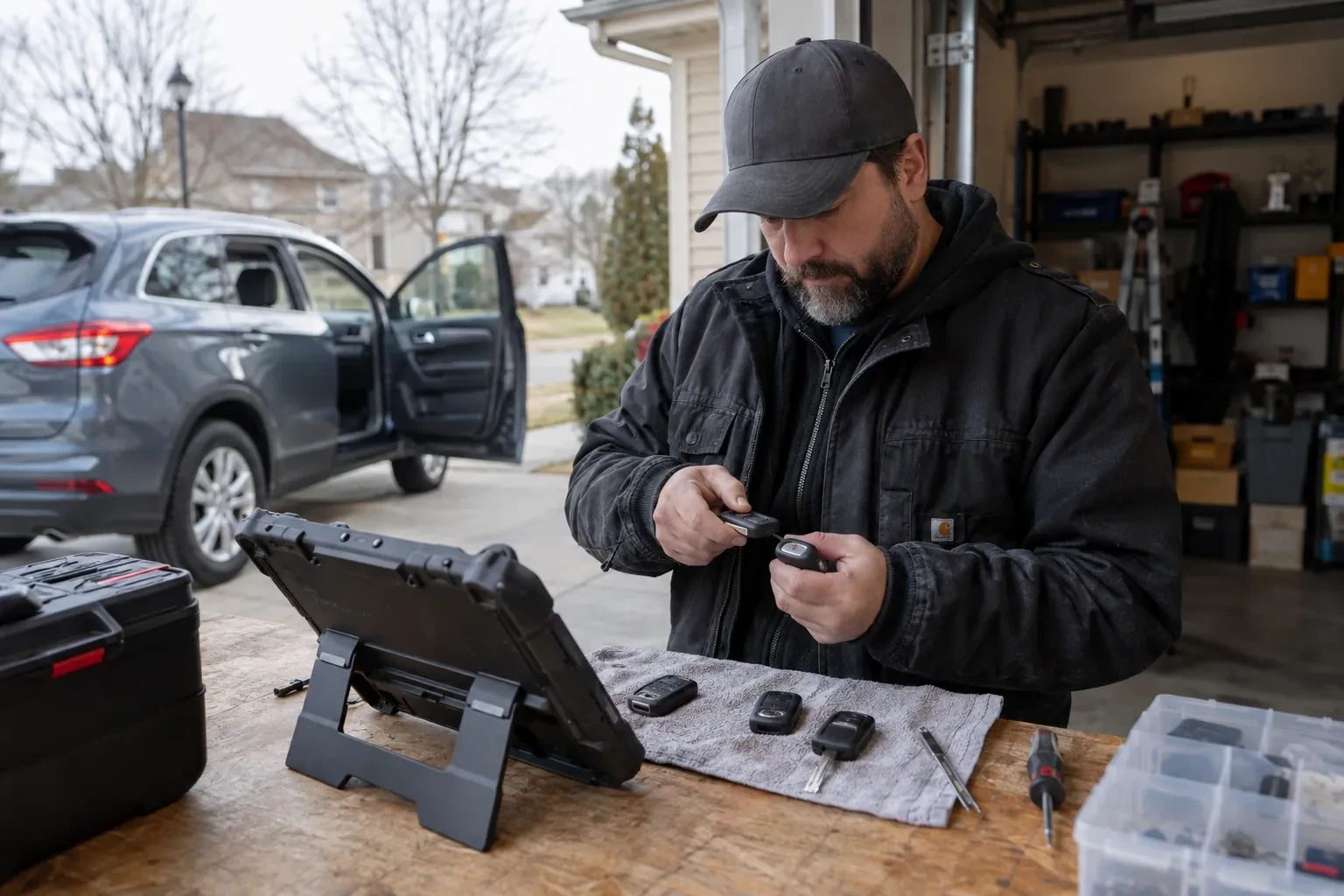
In the van
Transponder programming unit
Code-cutting machine
Penetrating fluid
Motorcycle key blanks
Fob shells and batteries
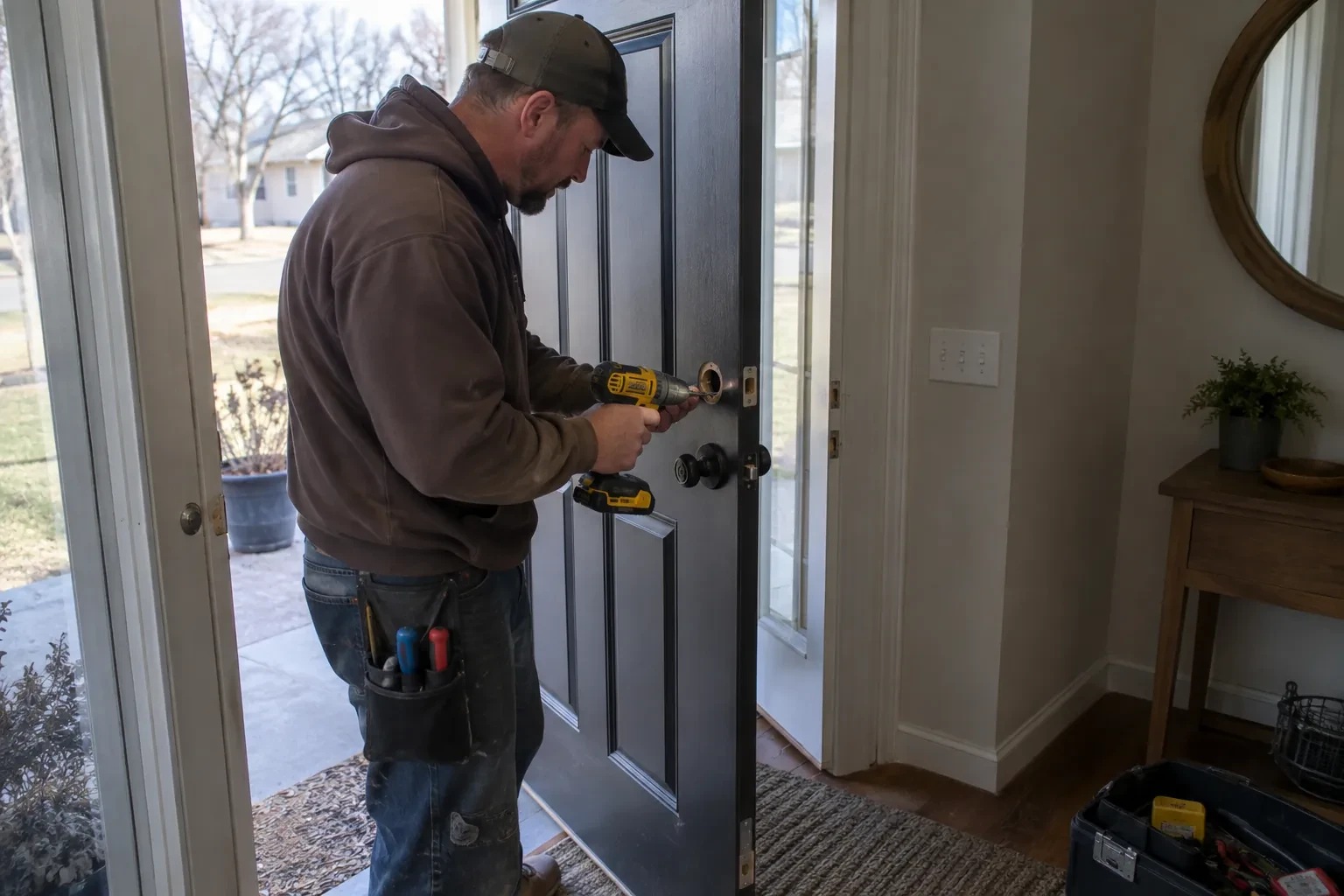
Motorcycle & Scooter Keys
What affects the quote
Distance to the machine's location
Distance to wherever the machine is kept, whether a driveway across town or a more remote property, is part of every call, and travel time is reflected alongside the key work itself.
Whether a working key already exists
Whether a working key still exists changes the job considerably: cutting or duplicating from one is the more direct route, while decoding a lock with nothing to reference takes longer and shapes the time reflected in the total.
Bringing multiple locks onto one key
Bringing the seat, fuel cap or a storage lock onto the ignition's key is extra work per lock rekeyed, separate from cutting the key itself, and is priced as its own line.
What to have ready
- What is the make, model and year of the machine?
- Is the steering lock turning freely, or does it feel stuck?
- Would you like every lock brought onto one key?
Motorcycle & Scooter Keys: questions
QuestionsWhat is a good way to keep a spare key safe?
Somewhere away from the machine itself is the main principle: not under the seat, in a saddlebag, or taped inside a compartment, since those are the first places anyone checks. A drawer at home, a family member's keyring, or a small lockbox mounted separately all work. Testing the spare on the actual lock before relying on it confirms it will do the job the one time it is needed.
Should I get a whole new ignition switch or just a new key?
That depends on the lock's condition rather than the key alone. If the wafers and springs inside are still sound, a correctly cut key restores normal operation without any hardware changed. A lock with worn-oval wafers, a cracked housing, or damage from an earlier forced attempt is better replaced outright, since a new key cannot compensate for parts that have physically worn or broken.
Can a locksmith program a new immobiliser or transponder key?
On many machines that carry one. The mechanical cut and the electronic pairing are handled as two separate steps: the key is shaped to fit the lock, then its chip is taught to the vehicle's module using an existing key or programming equipment built for that system, where the maker's own security rules allow it. Both steps are tested with a full engine start, since a key can turn the switch and still fail to start the machine if the chip was never paired.
Related services
- Car Key ReplacementThe fob went through the washing machine in a jacket pocket.
- Spare Car Key DuplicationA car sits at the cottage all season, and the only key to it lives on a ring three hours away in the city.
- Key Fob ProgrammingA cracked case or a spin through the wash left the fob unresponsive, and opening it up reveals a slightly corroded board where the buttons used to sit.