Change or rekey · Oakville
Gate & Building Entry Locks in Oakville
The driveway gate drags a groove into the gravel every time it swings, and the latch stopped catching weeks ago.
In plain words
A building outlives its tenants, and every move-out that skips a rekey leaves one more key in circulation that nobody living there today can account for. This service treats that turnover as routine business: the shared entry's cylinder is rekeyed to a fresh combination, new keys are cut for everyone who currently needs one, and any gate on the same property that should share that key is brought along to match. What used to be an open question about who can get in becomes a short, current list.
How the visit goesEvery time the courtyard gate closes, it slams hard enough to rattle the fence panels, and the deadlatch never quite drops into the keeper before the spring yanks it the rest of the way. One good gust of wind and it bounces right back open.
Gate & Building Entry Locks
How the visit goes
Reading a frost-heaved or settled post
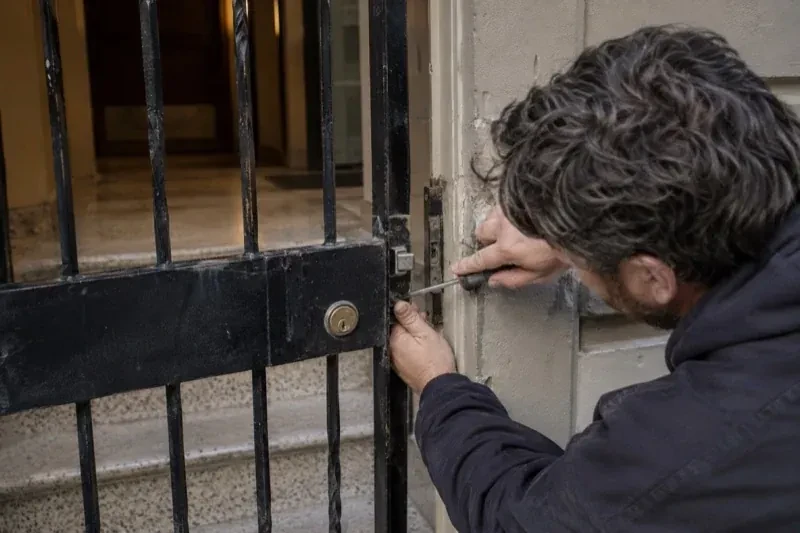
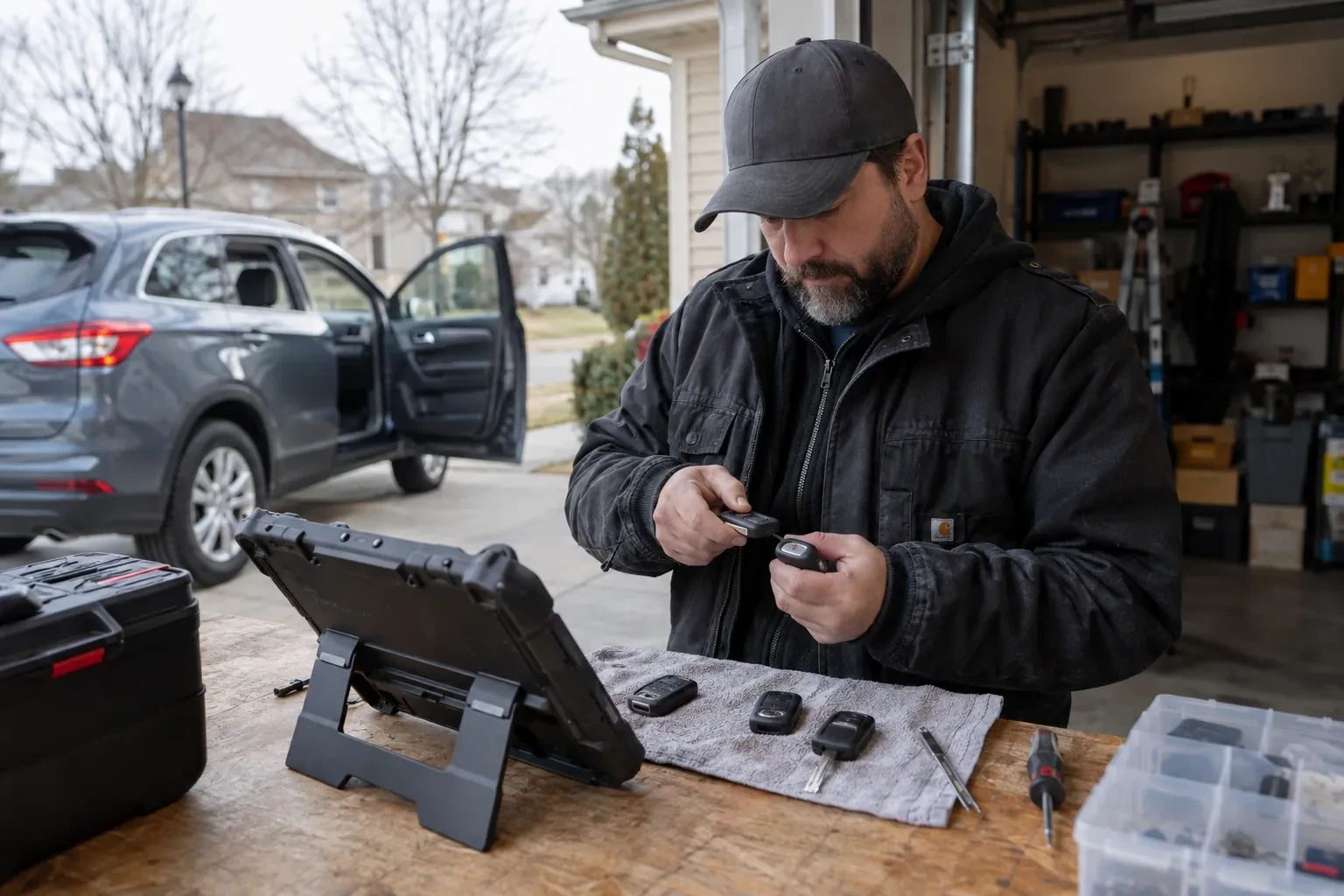
Ground movement shows up as a lock problem long before anyone thinks to blame the post. The locksmith checks whether the gate post has lifted, tilted or settled relative to the latch post it is supposed to line up with, and by how much, since a small seasonal shift is different from a post that has genuinely moved for good. This distinction decides whether the fix is resetting the strike position for now or addressing the post itself, and it keeps the same misalignment from returning with the next frost.
Freeing a seized or salted padlock
A padlock or gate cylinder stiffened by rust, dried grease or old grit is worked open with patience: a penetrating product suited to locks, gentle heat where appropriate, and a pick or the original key worked in small movements rather than forced. Where the internals have corroded past saving, the padlock or cylinder is replaced with a weather-rated unit built for that kind of exposure. Afterward the mechanism is dried and treated with the lubricant the manufacturer specifies for that cylinder, since the right product for one model can gum up another.
A post and frame that hold their position
Where ground movement had thrown the gate out of line, you leave with a post that has been reset, packed or braced so it stays where it was put, not just a strike that was shimmed to match wherever the post happened to be that day. The gate should now close consistently through the seasons rather than needing a fresh adjustment every time the ground shifts. Check it again after the next hard frost or a wet spring, since soil movement is ongoing rather than a one-time event.
Gate & Building Entry Locks
In the van
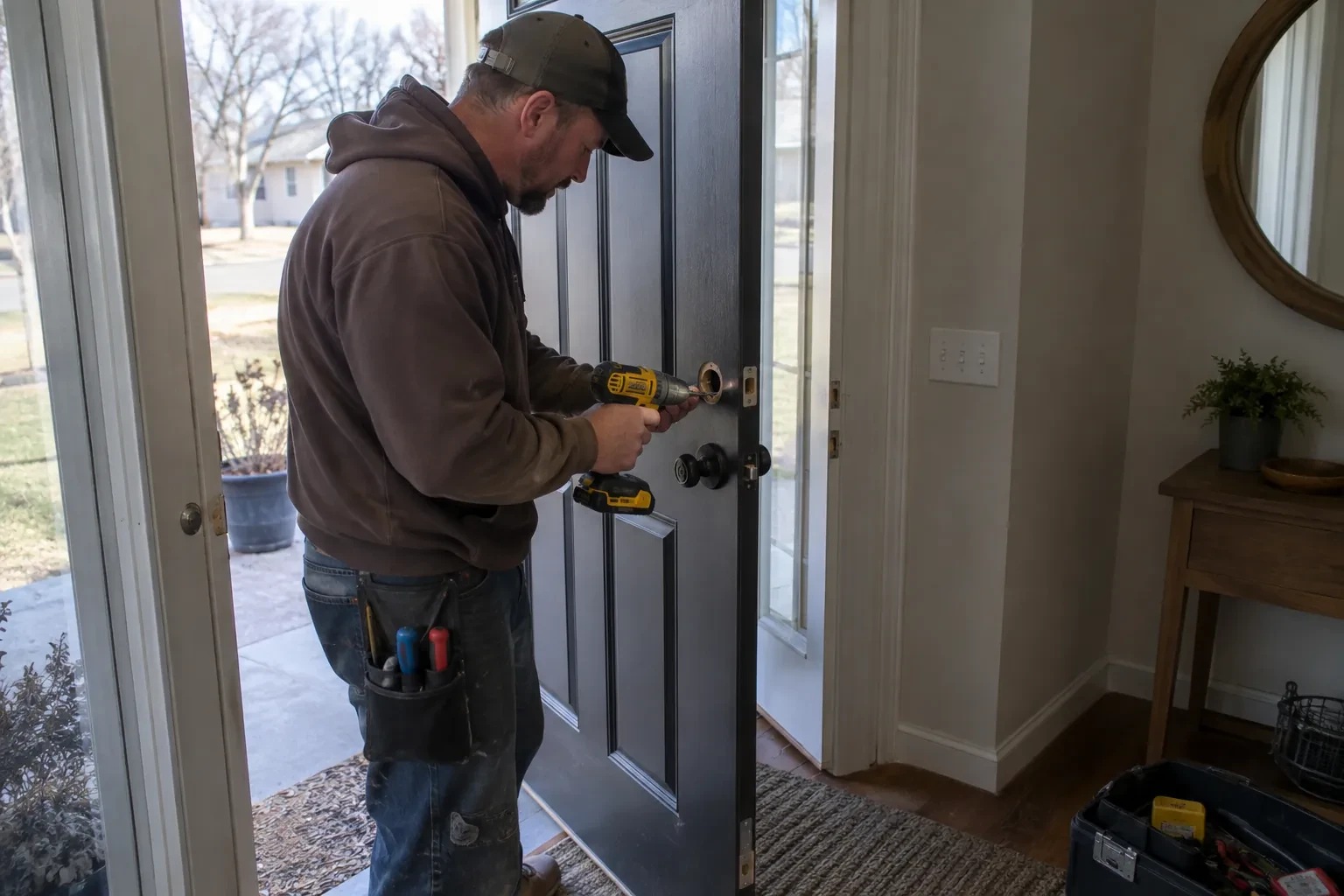
Cylinder decoder and pick set
Strike plates and keepers
Gate locks and latches
Key blanks and code cutter
Weather-rated cylinders
Gate & Building Entry Locks
What affects the quote
Access to the gate or entry
A ground-level gate on an easy driveway is straightforward. A shared building entry behind a locked lobby, a gate at the far end of a long property, or awkward scaffolding around the hardware adds time the quote takes into account.
Number of gates or entries involved
One gate lock is the simplest case. A front gate, a side gate and a shared building entry looked at in the same visit is naturally a longer job with more hardware to work through.
Condition of the closer, hinges and post
Simple adjustment of an existing closer is a smaller job than replacing a worn closer, correcting sagging hinges, or resetting a post that has shifted with the ground; the quote follows whichever combination the assessment finds.
What to have ready
- Is this a single household gate or a shared building entry?
- Is the gate wood, metal, aluminum or vinyl?
- Which gate or door is giving you trouble?
Gate & Building Entry Locks: questions
QuestionsHow do you decide whether to repair a gate lock or replace it?
The decision follows what the assessment actually finds rather than the age of the hardware alone. A cylinder that is only stiff or slightly worn is usually serviced and left in place, while one that is pitted, cracked or built to a grade unsuited to its exposure is replaced. The same logic applies to a closer or hinge: adjustment first, replacement only once the part itself has genuinely failed. You are told which category the hardware fell into and why before any work proceeds.
Someone tried to force our gate open. What happens now?
The locksmith first looks over the damage without disturbing it, noting pry marks, a bent strike or a cylinder that has been scored or spun, since that record is useful to have regardless of what else follows. Any hardware that was compromised is replaced rather than trusted, and a weak point the attempt exposed, such as an undersized hasp or a strike with too little bite, is addressed at the same time so the same approach would not work a second time.
Can a gate that slams shut be fixed without replacing the whole closer?
Often, yes. A closer that slams is frequently just out of adjustment rather than worn out, and bringing its closing speed and final latching action back into a sensible range solves the problem on its own. Replacement becomes the answer when the arm, seals or internal fluid have genuinely failed, which the locksmith checks for directly rather than assuming from the symptom alone. Either way, the gate is tested through several full cycles before the visit is called finished.